Mon–Sat 7am–6pm · 24/7 Emergency Line
Serving Santa Ana & Central OC

A one-off blockage happens to everybody. The same drain backing up again a few months after it was cleared is a different thing entirely: the snake removed what was caught, and whatever was catching it is still there. Snaking treats a symptom, and the symptom is not the problem.
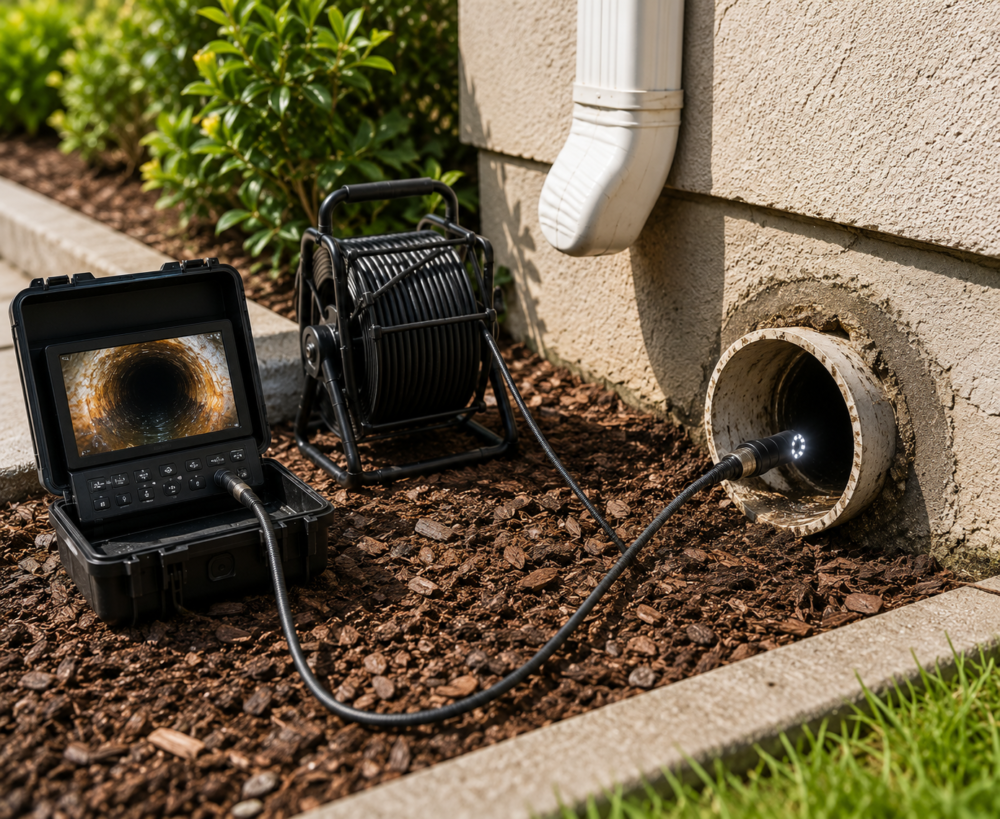
A snake bores a hole through a blockage. That restores flow, which is why the drain works when the technician leaves. What it does not do is address why material stopped there in the first place.
| What is actually there | What the snake did |
|---|---|
| Roots at a joint | Cut a channel through them; they regrow |
| A belly holding standing water | Cleared what settled; the dip remains |
| An offset joint | Punched through what caught on the step; the step remains |
| Scale in cast iron | Made a hole; the narrowed bore remains |
| A crack or partial collapse | Cleared debris; the defect remains |
| Grease | Bored through; the coating on the wall remains |
| A genuine one-off blockage | Actually fixed it, and it stays fixed |
| How soon it returned | Usually means |
|---|---|
| Within days | The clearing did not reach the actual blockage |
| Within a few weeks | Grease, or a significant restriction very close by |
| Within a few months | Roots, or a belly collecting solids |
| Within a year or two | Roots regrowing, or slow scale in cast iron |
| Several years later | Possibly a genuine second one-off |
| It never fully cleared | The line is compromised, not blocked |
Anything under a year is worth a camera before paying for a third clearing. The inspection costs roughly what a clearing costs, and it is the only thing that will tell you which of the six causes you actually have.
This narrows where the problem is faster than anything else, and you can work it out yourself in ten minutes.
The distinction matters because a single slow sink is a small job and a compromised main line is not. Gurgling in a fixture that is not being used is the classic sign of the second.
The inspection is charged whether or not a fault is found, because you are buying the inspection and the recording rather than a result. A clean line is a legitimate outcome and worth having on file.
Set it against clearing the same drain twice a year indefinitely. Everything we price is on the pricing page, and the specific breakdown is on sewer camera inspection cost.
| What goes down | What it does |
|---|---|
| Cooking grease and oil | Cools, sticks to the wall, and catches everything after it |
| “Flushable” wipes | Do not break down like paper: a very common find |
| Coffee grounds | Settle and compact, particularly in a belly |
| Hair, in showers | Binds with soap residue into a mat |
| Rice, pasta and starches | Swell, and keep swelling |
| Cat litter, even the flushable kind | Sets |
| Paper towels and tissues | Made not to disintegrate. That is the point of them |
None of that causes a recurring clog on its own in a sound, correctly graded line. It flows away. It causes one where there is already a rough spot, a dip or a narrowing for material to catch on. Habits and defects compound.
Before anybody looks, the age of the house narrows the likely answer considerably.
| Material | Era | How it produces a recurring clog |
|---|---|---|
| Clay | Pre-1970s | A joint every few feet, roots at any of them |
| Cast iron | 1950s–1970s | Scale builds inward; the rough surface catches everything |
| Orangeburg | Mid-century, occasional | Deforms into an oval, then collapses |
| ABS plastic | 1970s onward | Usually sound — look for a belly or crushing instead |
| Lined pipe | After a CIPP repair | Should not recur; if it does, check the lining job |
A mid-century Santa Ana house on original clay with a mature tree nearby is the single most common version of this call, and roots are the answer far more often than not. A 1990s house on ABS that keeps clogging is a different question, and a belly, often from settlement or from how the line was bedded originally — moves to the top of the list.
We are licensed and insured plumbers, and this site is about leaks — finding the ones you cannot see and repairing them properly. Roughly half of what looks like a plumbing leak turns out not to be one, so the boundary is worth stating plainly.
Roof leaks are a roofer. Water under an air handler is an HVAC technician clearing a condensate drain. Water under an appliance is appliance repair. Drying, restoration and mold are separate trades again, and gas line repair is SoCalGas or a licensed gas fitter. We detect gas leaks, we do not repair gas lines.
The full list, with the trade to call for each, is on what we don’t do.
| Sign | Why |
|---|---|
| Sewage backing up into a tub or shower | A health issue — stop using water now |
| Multiple fixtures backing up at once | The main line is failing, not blocked |
| Sewage surfacing outside | The lateral has broken below ground |
| Ground settling above the line | Soil is washing into a break |
| A smell indoors with slow drains | Waste is not clearing the system |
Anything on that list means stopping water use in the house until somebody looks. Everything else on this page can wait for a scheduled appointment.

Find out which of six causes you have before paying for another clearing.
(714) 386-7923Call or text, day or nightSchedule a VisitBecause the snake bores a hole through what was caught and leaves whatever was catching it — roots, a belly, an offset joint, scale or a crack. Flow is restored, the defect is not, and material starts collecting again.
Anything inside a year points at a defect rather than a blockage. Within days usually means the clearing never reached the real obstruction; within months points at roots or a belly collecting solids.
If several fixtures are slow at once, if a toilet gurgles when the washing machine drains, or if water backs up in a shower when a toilet is flushed, it is the main line. One slow sink with everything else fine is local.
A dip in the line that holds standing water permanently, so solids settle there instead of flowing on. No clearing method fixes it and no lining product corrects it, the section has to be excavated and re-laid to grade.
Not repeatedly. It generates heat and sits against the pipe wall above a blockage it cannot clear, which is genuinely bad for old cast iron. It also does nothing at all about roots, a belly or a crack.
It costs roughly what a clearing costs and it tells you which of six causes you actually have. Against clearing the same drain twice a year indefinitely, it is not a close call.
They are one of the more common things we pull a camera back out of. They do not break down the way paper does, whatever the packet says. In a sound, correctly graded line they would still flow away regardless. They catch on something. They catch on something.
That is a real and useful result, and it points at habits or at a fixture-level problem rather than the line. You keep the footage, which is worth having on file the next time somebody suggests a sewer replacement.
Yes — sewage backing up into a tub or shower, several fixtures backing up at once, or sewage surfacing outside. Stop using water in the house and call. Everything else can wait for an appointment.
You can, and some people do for years. What is worth knowing is that roots widen the defect they grow through, so the interval between clearings tends to shorten, and the repair gets larger while you wait.