Mon–Sat 7am–6pm · 24/7 Emergency Line
Serving Santa Ana & Central OC

SERVICE AREA · PARK SANTIAGO, SANTA ANA

Leak Detection in Park Santiago, Santa Ana

Park Santiago was built out from the 1920s through the 1950s in Craftsman, Spanish-inspired, and Tudor Revival styles, on ground first subdivided in the winter of 1922 as the Edgewood Park tract, in the part of the city long known as the Northside. That gives it the widest single-neighborhood construction-era span in our service area. A three-decade build-out means a Park Santiago homeowner can’t assume their plumbing matches the house two doors down, which is exactly the kind of neighborhood-specific context worth knowing before looking into a hidden leak.

Leak Detection Santa Ana service van serving the Park Santiago neighborhood of Santa Ana

Why Park Santiago’s Homes Are Prone to Hidden Leaks

That three-decade span means Park Santiago’s earliest 1920s homes likely started on raised foundations with galvanized and cast iron plumbing, while its 1950s homes are more likely on early copper-era construction. As with Washington Square, the right approach is detecting your specific home’s condition, not assuming based on the decade next door.

Whichever era a given Park Santiago home falls into, decades of exposure to Santa Ana’s hard water works on galvanized steel, cast iron, and early copper alike, which is why the same pattern of slow pinhole leaks and drips shows up across the neighborhood’s different building decades. See why Park Santiago’s multi-decade housing stock is at risk for the broader Santa Ana context behind this pattern.

Signs of a Hidden Leak in Your Park Santiago Home

A hidden leak in a Park Santiago-era home usually shows up as one of a few specific signs, not a puddle on the floor. Here’s what to watch for:

  • A sudden jump in your water bill with no change in how you’re using water
  • The sound of running water when every fixture in the house is off
  • A warm spot on the floor, especially near a bathroom or kitchen
  • Noticeably low water pressure at a faucet or shower
  • A musty smell without an obvious source
  • A wet or unexpectedly green patch in the yard
  • Brown or rusty water from a tap that’s usually clear

Any one of these is worth a call, not necessarily a diagnosis on its own. See our full slab leak signs and symptoms checklist for more detail on each one, and our page on why your water bill might suddenly be so high if that’s the sign you’re seeing.

How We Detect Leaks in Park Santiago Without Digging Up Your Home

We find the leak first, precisely, using non-invasive methods like

01
acoustic listening,
02
thermal imaging,
03
and pressure testing,
so nothing in your home gets opened up on a guess.

Because a 1920s Park Santiago home and a 1950s one down the same street can carry entirely different plumbing, we confirm what we’re dealing with using the same detection sequence rather than assuming based on decade. For the full explanation of how each method works together, see our Santa Ana-wide slab leak detection and repair work.

Our Guarantees & Pricing in Park Santiago

Detection is a flat-rate fee agreed when you book. Where the line runs somewhere acoustic and thermal methods cannot separate, tracer gas confirms it, which is what decides between a spot repair at that point and a reroute of the whole run. We back every detection call with a no-find-no-fee guarantee, and every repair with a 2-year workmanship warranty; detection calls run $150 to $500 and are credited toward the repair if you move forward. Because Park Santiago spans several decades of construction, repair cost depends entirely on what we find in your specific home, whether that’s a straightforward spot repair or a larger repipe conversation.

01
No-Find-No-Fee Detection
If we can’t locate the leak during your detection visit, there’s no detection fee.
02
2-Year Workmanship Warranty
Every repair we complete carries a 2-year workmanship warranty.
Flat rate
Detection Visit
$150 – $500
Credited toward the repair if you move forward.
The Repair Itself
Quoted on-site,
in writing
Confirmed in writing on-site, once the leak is located.

Every quote is confirmed in writing on-site, once the leak is located. See our transparent pricing overview for how we price every job, and our slab leak repair cost breakdown for a closer look at what moves the price.

Serving Park Santiago and Nearby Santa Ana Neighborhoods

We serve Park Santiago and the rest of Santa Ana, including Santa Anita and Fisher Park, plus the broader central Orange County area:

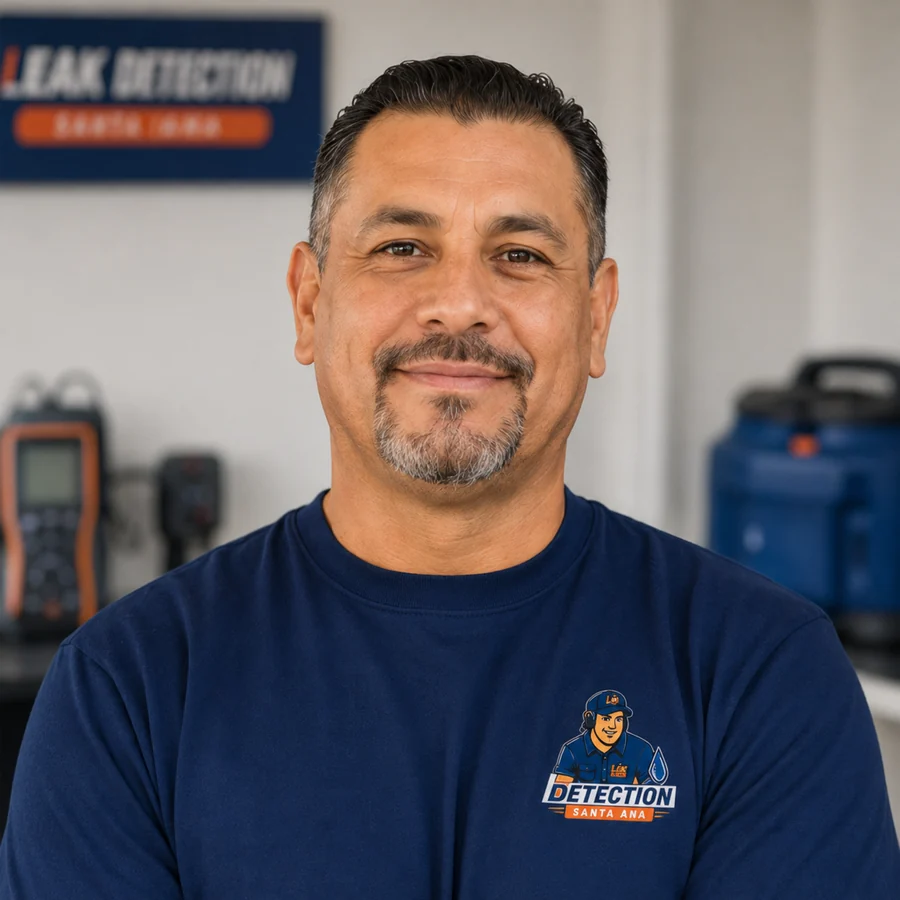
The Leak Detection Santa Ana team, who serve the Park Santiago neighborhood of Santa Ana

See our full service area list for every neighborhood and city we cover.

Leak in a Park Santiago home?

Craftsman, Spanish-inspired or Tudor Revival, we confirm before we recommend. We find the leak first, then repair it ourselves.
Leak Detection Santa Ana service van
Bilingual in English and Spanish, our team also staffs a 24/7 emergency line for Park Santiago homeowners dealing with a burst pipe or active flooding right now; scheduled detection visits and written quotes are still handled Monday through Saturday, 7am to 6pm.
Have a hidden leak you want looked at in your Park Santiago home? Contact us to schedule a detection visit.
David Herrera, Founder and Lead Leak Detection Technician
About the Author
David Herrera, Founder & Lead Leak Detection Technician
has spent 15+ years working hands-on on homes across Orange County, with a focus that narrowed over time to finding hidden leaks without the guesswork and demolition that usually comes with them. He founded Leak Detection Santa Ana to bring that same non-invasive, detect-and-repair approach to homeowners across the city, including here in Park Santiago. Read more about David’s background →

Leak in a Park Santiago Home?

1920s Craftsman or 1950s build, we confirm what your home actually has, then find the leak without digging.

(714) 386-7923Call or text, day or night Get a Leak Checked

What’s Included

  • Acoustic, thermal & pressure-testing detection
  • No digging or demolition to locate the leak
  • Firm written quote on-site, never over the phone
  • Same team detects and repairs
  • Bilingual, English and Spanish
  • No-find-no-fee & 2-year workmanship warranty

Frequently Asked Questions

Acoustic listening equipment picks up the sound of water escaping a pressurized pipe, and thermal imaging or pressure testing then confirms the exact location before any repair begins. See our full detection process for the complete sequence.

A slow leak can run for weeks or months before it produces a sign a homeowner notices, which is often why a sudden high water bill is the first real clue. A faster, more active leak tends to show up sooner.

It depends on your home’s plumbing age and repair history: an isolated leak in an otherwise sound system usually calls for a spot repair, while a home that’s already had multiple leaks is often a better candidate for a full repipe. See our repipe versus repair comparison for how we help you decide.

A sudden, unexplained jump in your water bill is one of the most common first signs of a hidden leak. See our full explanation of what drives a sudden water bill spike for what else to check before assuming the worst.

It depends on whether the damage is considered sudden and accidental or gradual, a distinction that varies by policy and carrier. See our guide on documenting a slab leak insurance claim for what to document; we don’t promise a specific coverage outcome.

Park Santiago was developed in phases from the 1920s through the 1950s, on ground first subdivided in 1922 as the Edgewood Park tract, which is why you’ll find Craftsman, Spanish-inspired, and Tudor Revival homes from different decades on the same streets. That range is also why plumbing age varies block to block.

The detection method is the same, non-invasive acoustic, thermal, and pressure testing, but what we expect to find often differs: the 1920s homes more often have older galvanized or cast iron pipe, the 1950s homes more often have early copper. We confirm either way before recommending repair.