Mon–Sat 7am–6pm · 24/7 Emergency Line
Serving Santa Ana & Central OC

A spa attached to a pool has its own plumbing, its own fittings and often its own heater, which means it can lose water while the pool beside it holds perfectly. When it loses water tells you most of what you need: running or off, and how far down it stops.
| Pattern | Points at |
|---|---|
| Loses more with the pump running | Pressure side, jets, returns, the heater |
| Loses more with the pump off | Suction side, the shell, or the spillway |
| Loses at the same rate either way | The shell, or a fitting through it |
| Spa drops, pool holds | Spa plumbing, the spa shell, or the spillway seal |
| Both drop together | Shared plumbing or the shared equipment pad |
| Stops dropping at a particular level | The leak is at that level, look there |
A heated spa loses water to evaporation faster than a pool does, because warm water evaporates faster and a spa has more surface area relative to its volume. Uncovered and heated, that can look like a leak.
Full bucket test method is on how to find a pool leak. For an uncovered pool, roughly a quarter of an inch a day is normal evaporation here: a heated spa will exceed that, and a cover will cut it sharply.
Ten minutes at the pad rules out or finds a meaningful share of spa losses, and it is the cheapest thing on this page. It costs nothing but attention.
Before assuming the shell or the plumbing, work through these. Between them they explain a good share of the calls, and every one of them costs nothing to check.
| What is happening | Why the level drops |
|---|---|
| The spa is used regularly | Splash-out and carry-out is real volume on a small body of water |
| No cover, and the heater runs | Evaporation on warm water, which is the biggest single non-leak cause |
| Auto-fill is switched off or failed | The level was being topped up and now is not |
| A multiport valve not seating | Water going continuously to the waste line |
| The spillway is set to run constantly | Water moving to the pool by design, check the valve positions |
| Backwashing more often than you realise | Every backwash is water out |
| A pool-side leak, not a spa one | If both drop, the spa may be innocent |
The auto-fill row catches people out repeatedly. A spa that has quietly been topped up for years does not appear to lose water at all, and the day the auto-fill fails, a long-standing slow leak looks like a brand-new one. If you have an auto-fill, check it is working before concluding anything about when this started.
| Step | What it establishes |
|---|---|
| Bucket test | Whether it is a leak at all |
| Pump on versus pump off | Pressure side or suction side |
| Watching where the level settles | The height of the leak |
| Pressure testing each line | Which specific line is losing |
| Dye testing at fittings and cracks | The exact point in the shell |
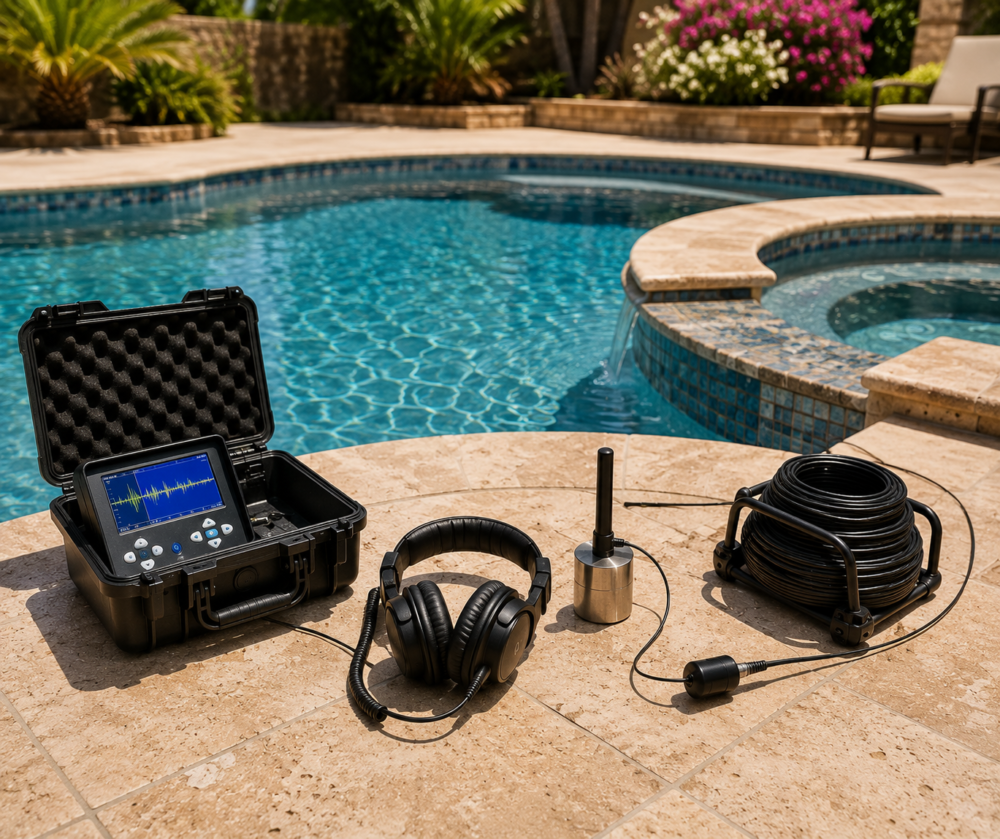
| Acoustic on a buried line | Where along the run to excavate |
Each step narrows what the next one has to search, which is why a spa leak that seems impossible usually is not. It just needs the steps in order. See pool leak detection.
The pump row is the urgent one. A pump that loses prime and keeps running can be damaged in a single afternoon, and it turns a plumbing repair into a plumbing repair plus a pump. If the level is dropping toward a suction fitting, turn the system off.
We are licensed and insured plumbers, and this site is about leaks, finding the ones you cannot see and repairing them properly. Roughly half of what looks like a plumbing leak turns out not to be one, so the boundary is worth stating plainly.
Roof leaks are a roofer. Water under an air handler is an HVAC technician clearing a condensate drain. Water under an appliance is appliance repair. Drying, restoration and mold are separate trades again, and gas line repair is SoCalGas or a licensed gas fitter. We detect gas leaks, we do not repair gas lines.
The full list, with the trade to call for each, is on what we don’t do.
Worth separating, because the advice is not the same.
| Type | Who to call |
|---|---|
| An in-ground spa attached to a pool | Us. It is pool plumbing |
| An in-ground spa with its own equipment | Us |
| A portable acrylic hot tub | The manufacturer or a hot tub service company |
| A swim spa on a pad | Usually the manufacturer. It is a sealed unit |
| Anything still under warranty | The manufacturer, first — do not void it |
A portable hot tub is a self-contained appliance with its own internal plumbing, and opening one up is not what this business does. In-ground spa plumbing is.
Fitting and equipment repairs sit at the lower end because everything is accessible. A buried line between the spa and the pad is where the number climbs, and what sits on top of that line — decking, coping, hardscape — moves it more than the plumbing does.
Run the bucket test both ways, then we will pressure test the spa's own lines.
(714) 386-7923Call or text, day or nightSchedule a VisitBecause a spa has its own plumbing, its own fittings and often its own heater. It can leak while the pool it is attached to is perfectly sound. The spillway seal, the jet fittings and the spa’s own lines are the usual suspects.
The bucket test: weighted bucket on a step, water inside level with the water outside, both marked, 24 hours. Both dropping equally is evaporation. Run it with your heater on its normal schedule, or the test does not represent normal conditions.
Yes — warm water evaporates faster, and a spa has more surface area relative to its volume. That is exactly why the bucket test matters: it measures your spa under your conditions rather than relying on a general figure.
The loss is on the pressure side — jets, return lines, or the heater. If it leaks more with the pump off, look at the suction side, the shell or the spillway. That single comparison is most of the diagnosis.
Almost certainly a jet fitting at that level. Where the water stops dropping is where the leak is. It is the most useful observation you can make, and it eliminates most of the possibilities on its own.
The seal where a raised spa overflows into the pool. It is a common failure point and it has a very specific signature: the spa drops to just below the spillway and then holds, while the pool level stays where it was.
Yes, and it costs nothing. Look at it while running and again with the system off, check the backwash line and the heater connections, and look for mineral staining, a slow leak leaves a trail long before it makes a puddle.
The water, chemicals and heating are a running cost rather than an emergency — though heating is a bigger one on a spa than people expect. What is urgent is the level dropping toward a suction fitting: a pump running dry can be damaged in an afternoon.
Usually not. Pressure testing the lines and dye testing the shell are both done with it full. Draining has its own risks in saturated ground, so it is a last resort rather than a starting point.
A portable acrylic hot tub is a self-contained appliance and it belongs to the manufacturer or a hot tub service company — particularly if it is still under warranty. In-ground spa plumbing is ours.