Mon–Sat 7am–6pm · 24/7 Emergency Line
Serving Santa Ana & Central OC

DETECTION METHODS · SANTA ANA & CENTRAL ORANGE COUNTY

Why Non-Invasive Leak Detection Beats Jackhammering the Floor

The fear behind this page is a real and common one: a homeowner suspects a hidden leak and worries the fix will mean tearing up a floor, a wall, or a section of yard just to find it. Non-invasive detection is the industry-recognized way to avoid exactly that.

Acoustic listening equipment, thermal imaging, tracer gas, video cameras, and pressure testing each sense a leak from outside the pipe, using a different physical signal, sound, temperature, gas, sight, or pressure change, to narrow its location before anyone opens anything. The result is that when repair does happen, the opening can be small and specific instead of exploratory.

Leak Detection Santa Ana non-invasive leak detection service van

How Non-Invasive Detection Actually Works

Non-invasive detection uses tools that sense the leak from outside the pipe: acoustic equipment that listens for the specific sound water makes escaping under pressure, thermal cameras that spot temperature differences where water is present, tracer gas that travels through the pipe and surfaces at the leak point, and video cameras that inspect the inside of a line directly. Together, these narrow the leak's location to a small, specific spot before anyone opens a wall or floor.

  • Acoustic (electronic) listening. Water escaping a pressurized pipe makes a specific sound, and sensitive listening equipment can pick that sound up through slab, soil, or wall material, then help triangulate roughly where along the line it's loudest.
  • Thermal (infrared) imaging. A thermal camera reads surface-temperature differences, and water from a leak often creates a subtly cooler or warmer patch on a floor or wall than the surrounding, dry material, which shows up clearly through the camera even though it's invisible to the eye.
  • Tracer gas testing. A safe, inert tracer gas is introduced into the empty pipe under pressure. Since the gas is lighter and travels further than water, it finds its way out through the same opening the leak uses and surfaces at ground or floor level, where a sensitive detector picks it up.
  • Video camera inspection. A camera on a flexible cable travels directly inside an accessible line, useful for sewer and larger-diameter lines, giving a direct visual look at cracks, corrosion, or blockages rather than an inferred signal.
  • Pressure and hydrostatic testing. Isolating sections of the plumbing system and testing which section loses pressure (or holds water under a hydrostatic test) narrows down which line, and often which general area of that line, is actually leaking before more specific tools go to work.

No single one of these methods is foolproof on every job, and they're often combined rather than used alone; a technician might confirm an acoustic reading with a thermal scan before finalizing a location. Together, they narrow a leak's location to a small, specific area, which is the entire reason repair afterward can be targeted instead of exploratory.

The Old Way vs. Precise Detection First

Without precise detection, finding a hidden leak the old-fashioned way often meant opening up multiple sections of wall, floor, or yard on a guess-and-check basis until the leak turned up. Detecting the leak's exact location first means the opening for repair can be small and specific instead.

This isn't a claim about any particular company still working this way; it's a contrast between two methodologies. A generalist approach that treats leak-finding as a side task, rather than a specialty, is more likely to rely on exploratory access because it hasn't invested in the detection equipment and training a dedicated leak-detection specialist has.

Even with the best detection available, invasive access is sometimes still genuinely necessary, once the leak's location is confirmed, opening that specific spot is simply part of completing the repair. The difference precise detection makes is where and how much gets opened, not whether anything ever does.

Why This Matters for Your Repair

A precisely located leak means the actual repair opening is small and specific, which typically means less drywall, flooring, or landscaping to restore afterward, and a faster overall repair timeline since less of the job is spent searching rather than fixing. It also means less disruption to daily life in the home while work is underway.

None of this changes the underlying cost drivers of the repair itself (access difficulty and repair method still matter, as covered in our slab leak repair cost guide), but it does mean the repair addresses only the actual problem area rather than every place the leak might have been.

It also means the risk of a wasted detection visit is genuinely low: if our equipment can't locate the leak, there's no detection fee, full stop. That guarantee only makes sense because the methods above are real, tested tools, not a guess dressed up as a service call. See our full guarantees and warranties page for the exact terms.

Not sure where the leak is? We find it before anything gets opened.
Call (714) 386-7923

What a Professional Leak Detection Service Covers

A leak detection service is a diagnostic visit, not a repair call. What separates professional leak detection from guessing is that every step produces evidence before anything is opened up.

The check starts at the water meter. With every fixture off and the main shut-off valve open, a meter dial that still moves proves water is escaping somewhere on the property. Close the shut-off valve and repeat: if the dial stops, the loss is inside the house; if it keeps moving, it is between the meter and the building.

From there the equipment narrows it down. Acoustic leak detection picks up the sound of water escaping a pressurised line and follows it to its loudest point, which is what makes foundation leak detection possible without cutting concrete to look. Thermal imaging reads the temperature signature that escaping water leaves in a floor or wall. A concealed leak behind tile or inside a wall cavity is located the same way, and so is the pinhole leak that copper develops after decades of hard water.

That is what residential leak detection services should mean in practice, and it is what to ask any of the leak detection companies you call: not whether they will find it. Ask what they will do to prove where it is before opening anything.

What the Visit Costs and What You Are Guaranteed

Our leak detection plumbing work is priced as a flat-rate detection fee, quoted when you book rather than adjusted on your doorstep.

If the equipment genuinely cannot locate the leak, the no-find-no-fee guarantee means you owe nothing for the visit. If it is found, the repair comes as a firm written quote afterwards, based on the actual failure, and the repair carries a 2-year workmanship warranty.

Who Actually Runs This Equipment

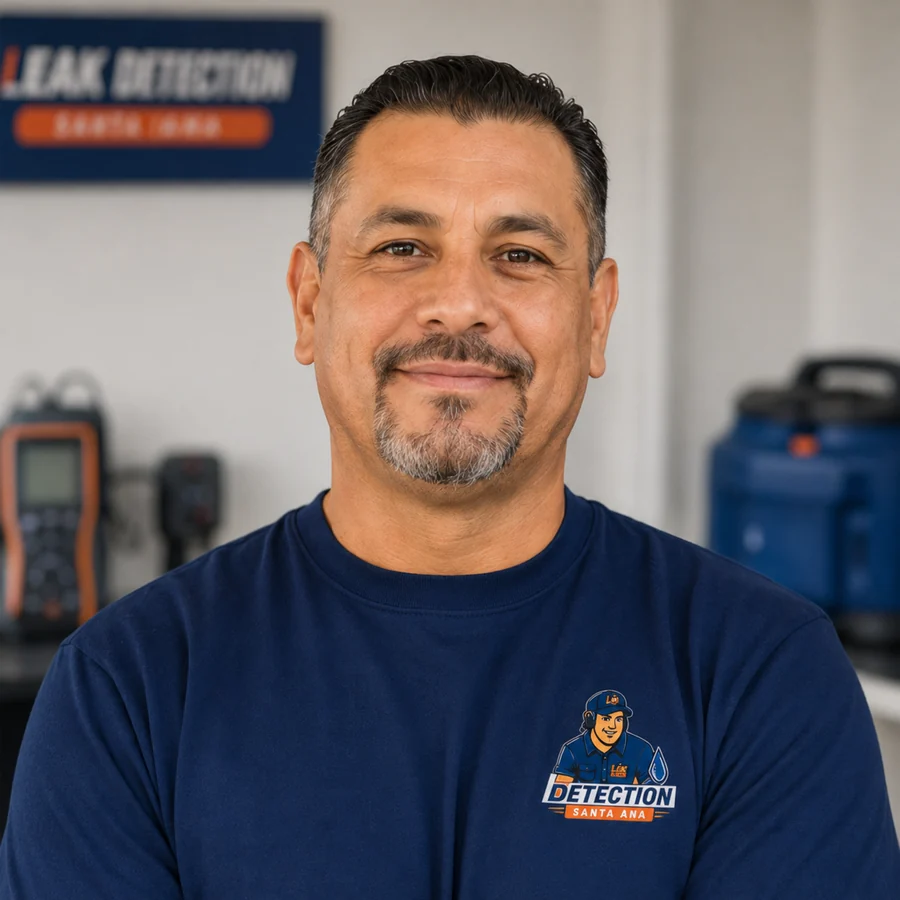
Non-invasive detection is only as good as the technician reading it. On our team, David Herrera, founder and lead leak detection technician, sets the standard for how these methods get used on every job, and the same detect-first discipline described above applies whether the job is a slab leak, a water heater, or a sewer line. If you'd rather talk through what you're noticing before booking anything, contact us and we'll walk through it with you.
Ready to find out what's actually happening in your plumbing, without a guess-and-check search? Contact us to schedule a detection visit, Monday through Saturday, 7am to 6pm, or reach our 24/7 emergency line if you have active flooding right now.
This page describes non-invasive detection methods in general terms; it does not claim any single method is infallible or that invasive access is never appropriate.
David Herrera, Founder and Lead Leak Detection Technician
About the Author
David Herrera, Founder & Lead Leak Detection Technician at Leak Detection Santa Ana
sets the standard for how the acoustic, thermal, tracer gas, camera, and pressure-testing methods described on this page get used on every job. Read more about David's background →

Suspect a Hidden Leak?

We locate it from outside the pipe first, so the opening for repair is small and specific instead of exploratory.

(714) 386-7923Call or text, day or night Book a Detection Visit

What's Included

  • Acoustic listening & thermal imaging
  • Tracer gas & video camera inspection
  • Pressure & hydrostatic testing
  • Exact leak location before anything opens
  • No-find-no-fee on the detection visit

Frequently Asked Questions

By using non-invasive detection tools, acoustic listening, thermal imaging, tracer gas, video cameras, and pressure testing, that sense a leak’s location from outside the pipe. These methods narrow the leak to a small, specific area before any digging or opening happens; see our slab leak detection and repair service for how this applies to a slab-specific leak.

Rarely, once the leak is precisely located first. Some repairs still require opening a section of slab or floor to reach the confirmed leak point, but precise detection means that opening is small and targeted rather than an exploratory search across a larger area.

Not inherently. Detection is priced separately from repair and is credited toward the repair if you proceed; see our transparent pricing page for the full published ranges rather than a single number here.