A whole-house repipe runs $6,000 to $15,000 in Orange County. PEX sits at the lower end, estimated at $4,000 to $8,000, and copper at the upper, $8,000 to $15,000. Square footage, bathroom count, single versus two story, and slab versus raised foundation move the number more than anything else.
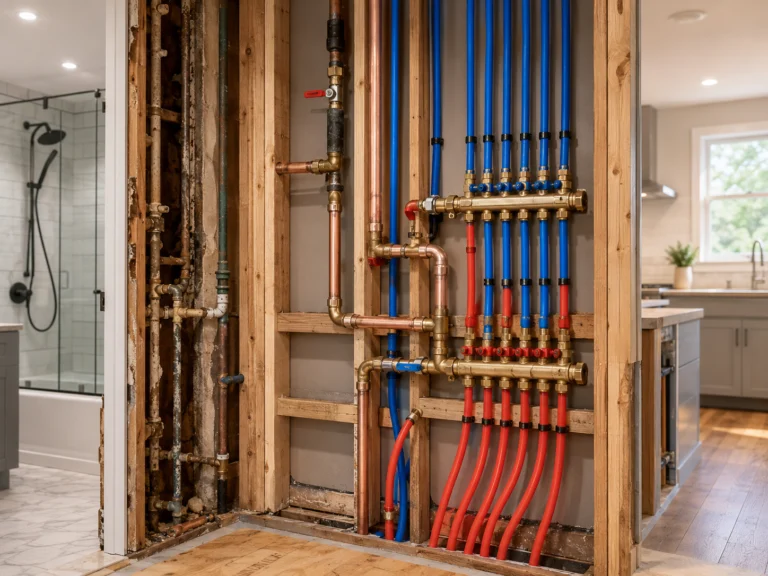
Material is the single biggest lever on the price. PEX is estimated at $4,000 to $8,000 for a whole house, copper at $8,000 to $15,000. Both sit inside our published whole-house repipe range of $6,000 to $15,000.
| Material | Estimated whole-house total | Where it sits in the range |
|---|---|---|
| PEX | $4,000 – $8,000 | Flexible tubing, fewer fittings, faster to run. Usually the lower end. |
| Copper | $8,000 – $15,000 | More labor per joint and a higher material cost. Usually the upper end. |
Estimates based on Orange County pricing, reviewed August 2026. Your price is quoted in writing after we see the job.
Where your home lands inside those ranges is mostly size and layout. A smaller single-story house repiped in PEX sits near the bottom. A larger two-story in copper, with more bathrooms and longer runs, sits at the top. We do not price a repipe by the square foot, because the same floor area can mean very different pipe runs depending on how the house is laid out and where the fixtures sit. Material costs rose roughly 8% through 2025, so it is worth holding a 10% contingency against a quote given months in advance.
Nine things account for almost all the variation between two quotes on the same street. None of them are negotiable line items; they are simply what the job involves in your specific house.
A whole-house repipe replaces your home's main water supply piping, so it requires a building permit and a final inspection everywhere in Orange County. What differs between cities is how the permit is applied for, how the fee is calculated, and how long it stays valid. Those differences change your start date more often than they change your price.
| City | What is specific here |
|---|---|
| Tustin | A Tustin permit becomes null and void if work has not commenced within 360 days of issue, per the city's Building Division. Worth knowing if you are permitting ahead of a planned remodel. |
| Irvine | Irvine's self-service minor residential permit covers up to four plumbing fixtures. A whole-house repipe replaces every supply line, so it goes through the full permit route rather than the automated one. See the city's Minor Residential Automated Permits page. |
| Orange | The Building Division accepts permit applications only through its Civic Portal, so there is no counter submittal. See Building and Safety Services. |
| Garden Grove | Permit fees are set on the valuation of the work and the number of plumbing systems involved, not as one flat figure, so a repipe permit on a larger house costs more. See the city's Permit Issuance FAQs. |
| Westminster | Since May 1, 2026, the general contractor and the plumbing subcontractor must both be registered with the city and signed onto the permit before it is released. See Building Permits & Plan Checks. |
| Santa Ana | Older multi-story additions and remodels are common, so access and drywall scope vary widely house to house. That is the main reason a Santa Ana quote is set on site rather than from a citywide average. |
| Anaheim | Housing runs from late-1800s stock around the historic Anaheim Colony core, where the 1857 Mother Colony House still stands, to the very large 1950s and 60s tract wave that took the city from about 14,500 residents in 1950 to over 104,000 by 1960. That is a wider spread of pipe ages than most neighboring cities. |
| Costa Mesa | The Eastside holds the city's oldest housing, with structures dating from the 1900s through the 1940s, and it was most of Costa Mesa's footprint when the city incorporated in 1953. Those are the oldest supply lines in the city. |
| Fountain Valley | Nearly all of the city's housing went up across the 1960s and 1970s, under a master plan adopted before building began. An unusually large share of homes therefore share the same original pipe and reach the same age-related failure window together. |
| Huntington Beach | The city grew fastest across the 1960s and 1970s — for a decade the fastest-growing city in the continental United States — so most of its stock dates from then, with older bungalows in the beach-adjacent pockets. |
| Newport Beach | Pipe age varies block to block. Simple wooden cottages and bungalows went up along the Balboa Peninsula from the turn of the twentieth century, and Corona del Mar was first laid out in 1904, while much of the rest of the city is far newer. |
Permit details link to each city's own published guidance and were checked in August 2026. Housing-era detail is drawn from city and local historical records. Cities change their processes; confirm current requirements with the city before relying on a date or a fee basis.
The quote covers the work of replacing the pipe and putting the walls back to a patched state. It does not cover finishing those walls cosmetically, which is a different trade and a separate decision for you to make.
| Included in the quoted price | Not included |
|---|---|
| Labor | Paint matching |
| Materials | Full cosmetic finish beyond the patch |
| Drywall-patch touch-up at every access point | Remodeling of the walls or ceilings we open |
| Permit and final inspection | Relocating the water heater |
| 2-year workmanship warranty | Material warranty, which the PEX manufacturer issues separately |
Every line above is confirmed in your written quote before you commit, so there is no surprise item once work has started.
Five steps from your first call to a firm number. Nothing is priced over the phone, because the two things that move the cost most, access and pipe material, cannot be established without seeing the house.
A repipe is the right answer for a system that keeps failing, not for a single leak. If you have had one slab leak in otherwise sound plumbing, a spot repair at $1,500 to $2,500, or a single-line reroute at $2,000 to $4,500, is usually the sensible spend. We would rather tell you that than sell you a repipe you did not need.
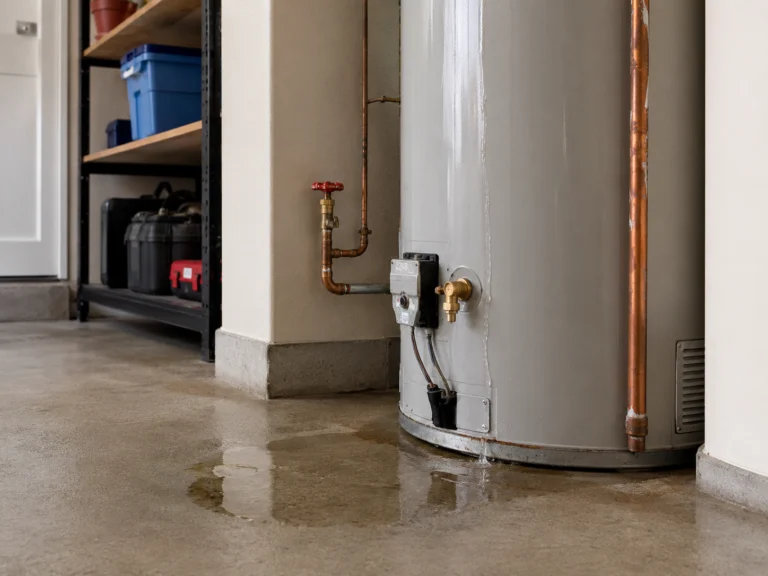
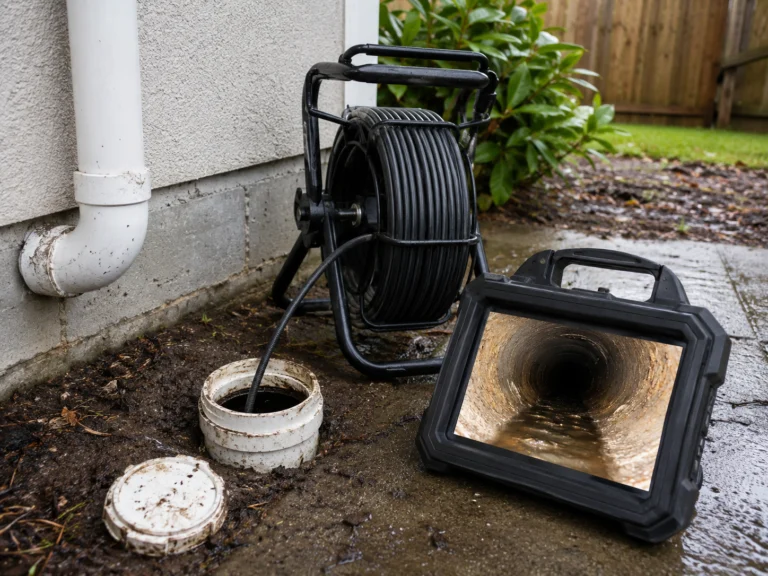
We also do not install or replace water heaters, and we do not perform gas-line repair. Those are separate trades and we refer them out. Our work is leak detection and the repairs that follow from it. See repipe versus repairing a single slab leak for how to weigh the decision, and PEX versus copper for the material choice.
$6,000 to $15,000 for a whole-house repipe in Orange County. PEX is estimated at $4,000 to $8,000 and copper at $8,000 to $15,000. Your price is quoted in writing after we see the job.
Yes, roughly half the installed cost. PEX runs an estimated $3.50 to $7.00 per square foot against $8.00 to $14.00 for copper. Cost is not the only difference, though. See our PEX versus copper comparison for how they differ on durability, layout, and water taste.
It includes drywall-patch touch-up at every access point we open. It does not include paint matching or a full cosmetic finish beyond the patch, and it does not include remodelling the walls or ceilings we access. Your written quote lists exactly what is covered before you commit.
Yes. A whole-house repipe replaces your home’s main water supply piping, so it requires a building permit and a final inspection, and that step is built into our timeline and price. How the permit is applied for and priced differs by city; see the permit table above for what is specific to yours.
Most whole-house repipes take a few days, not weeks. The exact timeline depends on your home’s size, number of storeys, and how many fixtures need new lines, which is why we confirm a specific schedule as part of the written quote.
Yes. Rerouting a single failing line is estimated at $2,000 to $4,500, and a full reroute of several lines at $7,500 to $14,000. A partial approach makes sense when the failures are confined to specific runs rather than spread across the whole system.
Usually not. Policies generally distinguish between sudden, accidental damage, which is often covered, and gradual deterioration or planned replacement, which is typically excluded. The pipe itself is usually not covered even where resulting water damage is. That determination belongs to your carrier, and we do not promise a coverage outcome. See our documentation guide for what to record.
We don’t have a financing program to point you to today. If spreading the cost matters for your household, raise it during your on-site quote, that’s the right moment to talk through payment timing honestly, before you commit to anything.
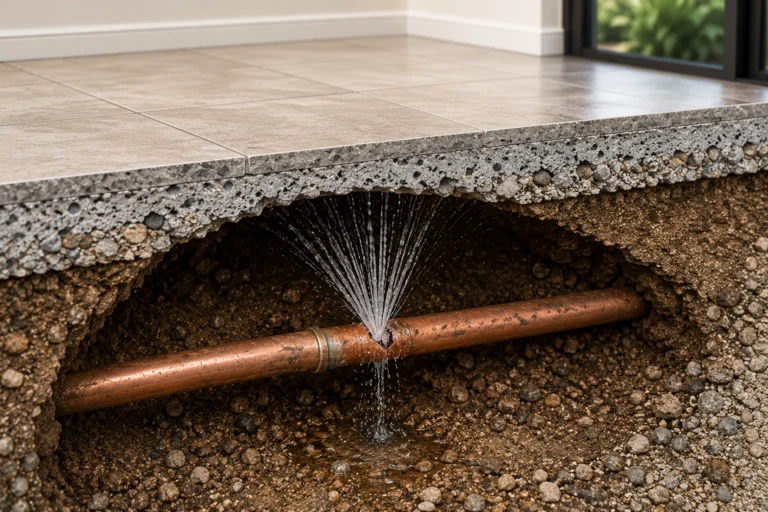
Yes, by roughly 25% to 50% on labour. On a slab foundation the supply lines cannot be reached from underneath, so new runs go overhead through the attic and walls, which means more access points and more patching.