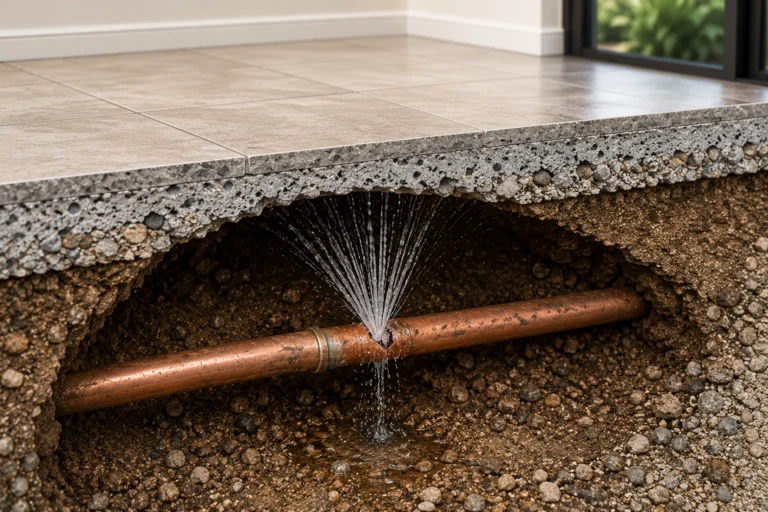
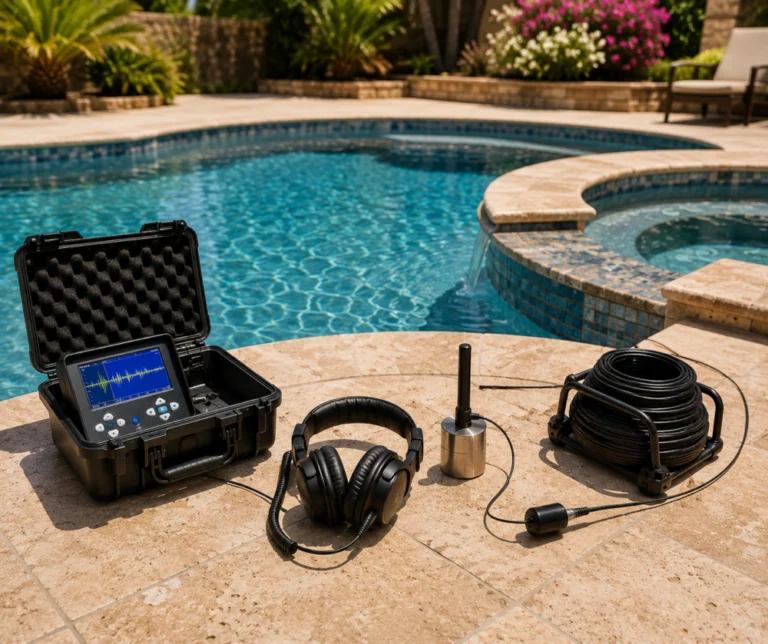
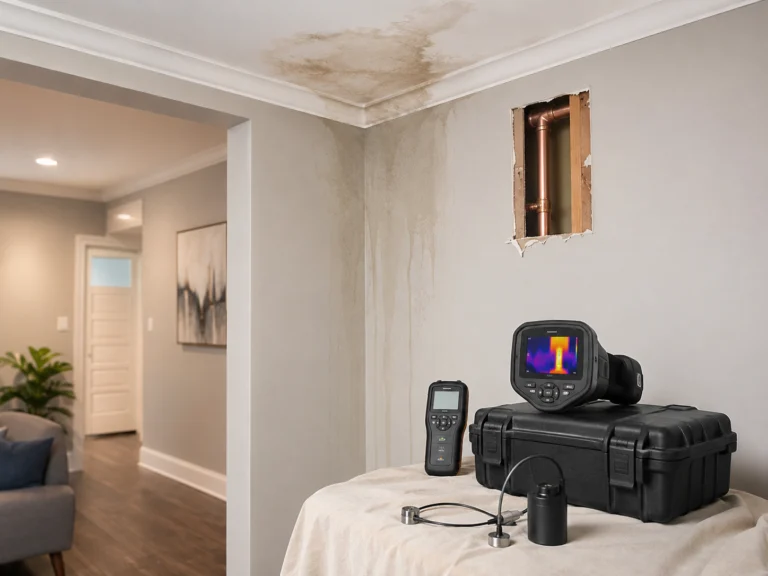
Water leak detection is the work of finding a leak you cannot see, under a slab, inside a wall, under the yard, behind a fixture, without opening the building to look for it. Acoustic listening, thermal imaging and tracer gas do the finding, and the leak is marked at the exact spot before anything is opened. Detection is a flat $150 to $500, credited toward the repair.
A hidden leak rarely announces itself as water. It announces itself as a number on a bill, a sound with no source, or a patch of floor that is warmer than the rest.
| What you notice | Most likely |
|---|---|
| Warm patch on the floor | Hot-water line under the slab |
| Bill jumped, nothing visible | Any pressurised line — start at the meter |
| Running water with everything off | A pressurised leak, often in a wall |
| Wet patch in the yard that will not dry | The main line, irrigation, or drainage |
| Musty smell, nothing visible | Long-running moisture, often under a raised floor |
| Low pressure everywhere | A supply leak, a failed regulator, or corrosion |
¿Prefiere leer esto en español? Detección de fugas de agua en Santa Ana. Atendemos en español.
Non-invasive methods come first, always. Concrete is opened after a leak is located, never as a way of locating it. See non-invasive leak detection.
The housing stock here does most of the explaining. A large share of Santa Ana went up between the 1950s and the 1970s, on concrete slabs, plumbed in copper. Those two facts together produce most of what we get called out to.
| Cause | What it does |
|---|---|
| Hard water | Scale builds inside the line and restricts flow, which raises pressure and wear |
| Copper age | Decades of flow thin the pipe wall from the inside until it perforates |
| Soil movement | Clay soil swells and shrinks with moisture, and the slab moves with it |
| Slab friction | A line rubbing against concrete wears a hole at one point |
| High supply pressure | Anything much over 80 psi shortens the life of every joint in the house |
| Poor original workmanship | A joint that was marginal in 1968 fails eventually |
| Tree roots | Drain and sewer lines only — roots follow moisture into a joint |
Santa Ana’s water is hard: the City reports roughly 250 ppm, about 15 grains per gallon. That is not a scare statistic, it is just the reason scale and pinhole leaks show up here more than they do in softer-water cities. It also means a pressure reading is worth taking on any older house: pressure and hard water compound each other.
| Where the leak is | What finds it |
|---|---|
| Under a concrete slab | Acoustic first, thermal to confirm on a hot line |
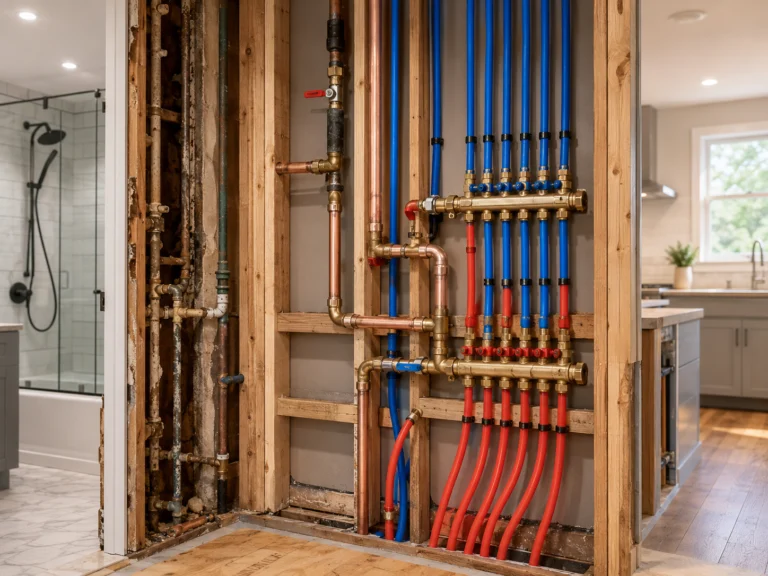
| Inside a wall or ceiling | Thermal and acoustic, with moisture readings |
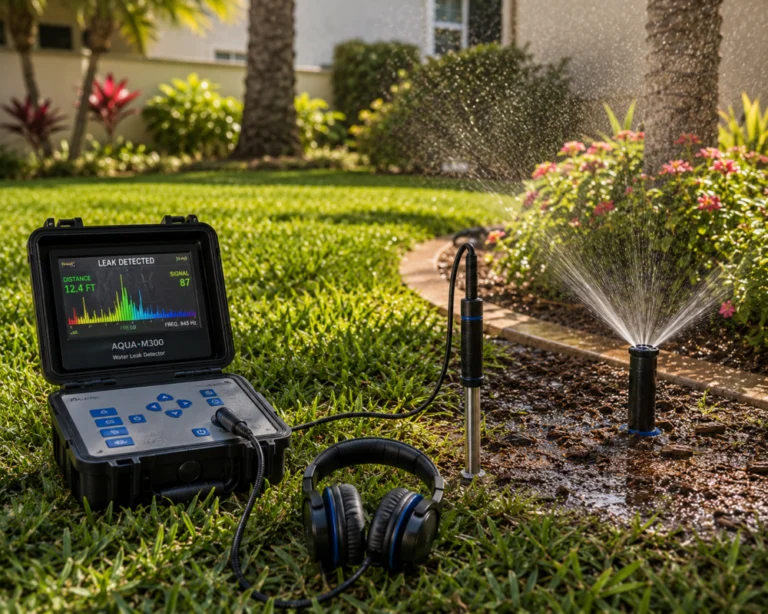
| Under the yard or driveway | Acoustic and tracer gas, after testing at the meter |
| Pool or spa shell and plumbing | Pressure testing the lines, dye at suspected points |
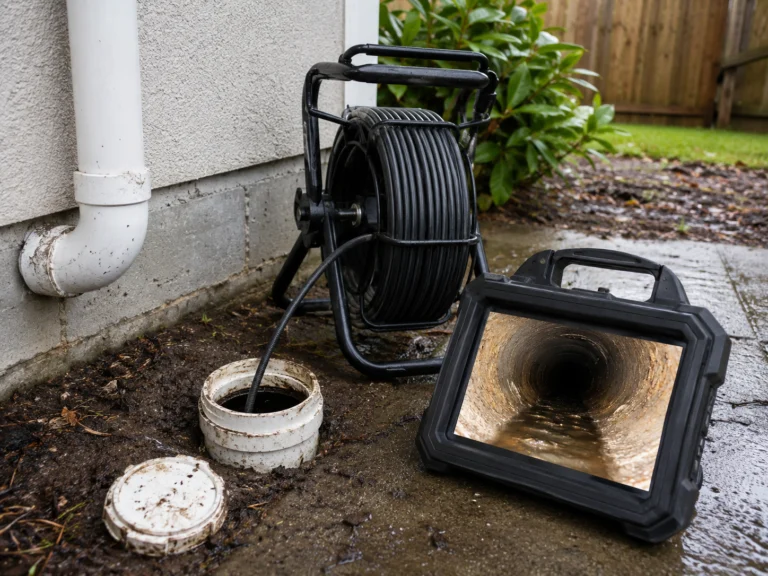
| Sewer or drain line | Video camera, a drain is not under pressure |
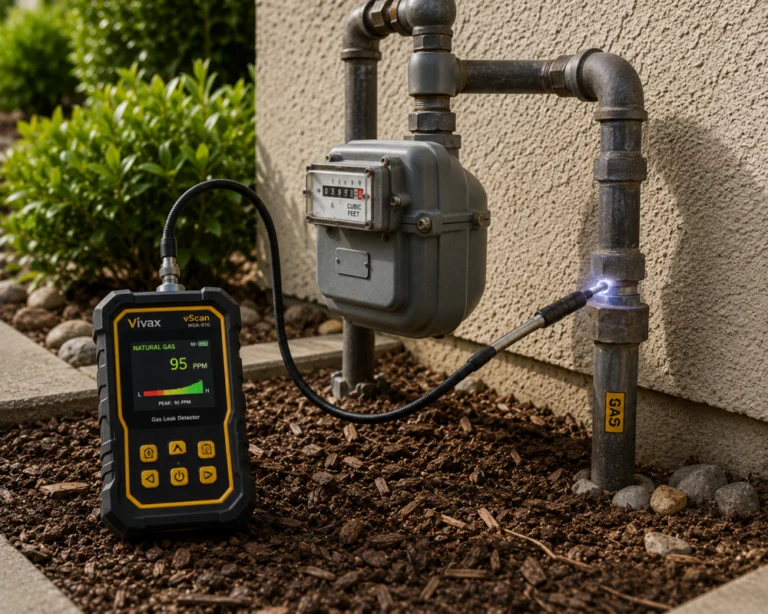
| Gas line | Gas-specific detection. We detect; we do not repair gas |
| No idea at all | Meter test first, then isolate system by system |
That last row is the most common starting point, and it is why the meter test matters: it converts “something is wrong” into “a pressurised line is losing water”, which is a much smaller problem to solve.
Flat rather than hourly, which matters because the leaks that take longest to find are exactly the ones an hourly rate would punish you for. If we cannot locate the leak during your paid detection visit, there is no detection fee.
Your price is quoted in writing after we see the job. Everything we price is on the pricing page.
We ask what you have noticed, check the meter, isolate system by system, then locate with acoustic and thermal before anything is opened. The leak is marked at the exact spot and you get a written report, photographs and a written quote.
The full sequence is on what happens on a leak detection visit.
This page is the overview. Each of these has its own page with the detail:
| Leak type | Page |
|---|---|
| Under a slab | Slab leak detection |
| Slab leak repair | Slab leak repair |
| Main line, meter to house | Main water line repair |
| Inside a wall or ceiling | Concealed leak detection |
| Pool and spa | Pool leak detection |
| Sewer line | Sewer line leak detection |
| Irrigation and sprinklers | Irrigation leak detection |
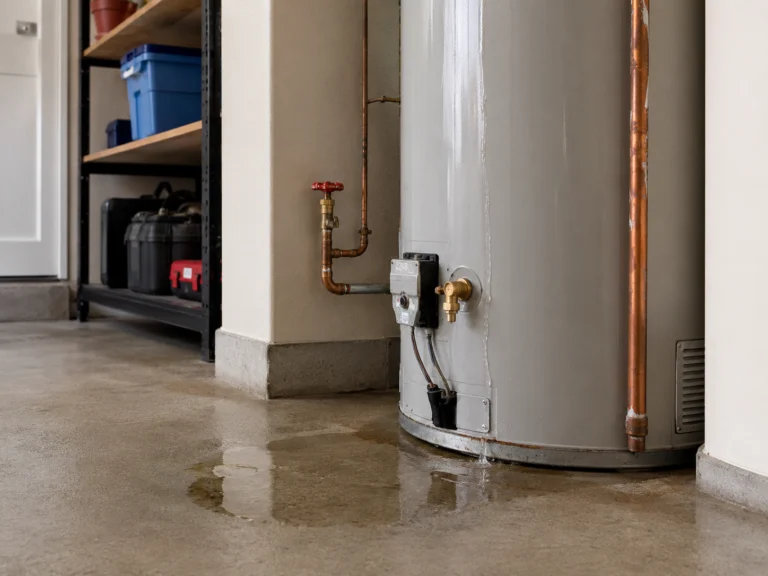
| Water heater | Water heater leak detection |
| Under a raised floor | Crawl space leak detection |
| Already searched, still not found | Mystery leak detection |
A hidden leak does not stay the same size. Water under a slab keeps moving, keeps wetting soil, and keeps running up a bill you are already paying. The reason to act on week one rather than month three is that the leak itself is usually the cheap part.
None of this means panic. It means a meter test today beats another month of wondering, and the test is free to do yourself.
The full list, with the red flags, is on how to choose a leak detection company.
We are licensed and insured plumbers, and this site is about leaks — finding the ones you cannot see and repairing them properly. Roughly half of what looks like a plumbing leak turns out not to be one, so the boundary is worth stating plainly.
Roof leaks are a roofer. Water under an air handler is an HVAC technician clearing a condensate drain. Water under an appliance is appliance repair. Drying, restoration and mold are separate trades again, and gas line repair is SoCalGas or a licensed gas fitter. We detect gas leaks, we do not repair gas lines.
The full list, with the trade to call for each, is on what we don’t do.
All four, whether or not you go ahead with the repair. Repairs carry a two-year workmanship warranty — full terms on guarantees and warranties.

Suspect a hidden leak? We locate it precisely first, then quote the repair in writing.
(714) 386-7923Call or text, day or nightSchedule a VisitA flat $150 to $500, credited toward the repair if you go ahead. It is flat rather than hourly on purpose, the leaks that take longest to find are the ones an hourly rate would punish you for. Your price is quoted in writing after we see the job.
That is the whole point of the equipment. Acoustic listening, thermal imaging and tracer gas all work without opening the building. Anything gets opened after the leak is located and you have a written quote — never as a way of locating it.
The meter settles it. Turn every tap in the house off, then watch the meter. If it is still moving, water is leaving the system somewhere. That test takes minutes and it is the single most useful thing you can do before calling anyone.
If we cannot locate the leak during your paid detection visit, there is no detection fee. There is also a real outcome worth naming: sometimes the plumbing turns out to be sound and the water is coming from a roof, an air conditioner or an appliance. You get that in writing too.
Both, and it is the same crew. That matters more than it sounds — when detection and repair are two companies, the location gets described rather than handed over, and the second company often re-diagnoses at your expense.
Not always. It is one of the more reliable signs. A hot-water line leaking under a slab warms the concrete above it, which is exactly what thermal imaging looks for. Radiant heating and a sun-warmed floor can both mimic it. See warm spot on the floor.
Usually longer than people expect. A hidden leak announces itself through a bill or a damp patch, and by then it has generally been running for weeks. That is why a bill jump with no change in usage is worth acting on rather than watching for another month.
Yes. The equipment and method are the same; what changes is access, scheduling and how many people are affected while the leak runs. See commercial leak detection.
Calls are answered 24/7 and a technician is dispatched 24/7, in English and Spanish. We will not quote a response time, because no honest after-hours window has been established.
Clear access to the suspected area, know where your main shut-off is, and try not to run water for about an hour beforehand. Acoustic detection listens for water escaping a pressurised line, and a system that has just been used is full of noise that masks it.