Mon–Sat 7am–6pm · 24/7 Emergency Line
Serving Santa Ana & Central OC

CORE SERVICE · SANTA ANA & CENTRAL ORANGE COUNTY

Main Water Line Repair in Santa Ana, CA

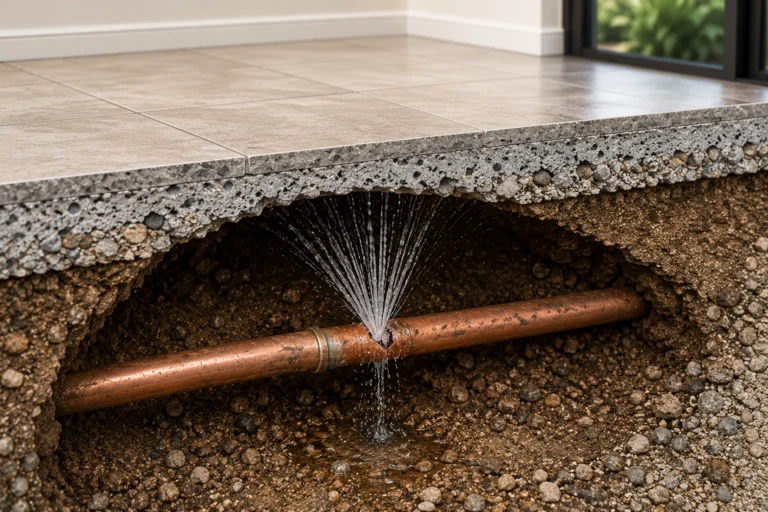
The main water line is the single run from your meter to the house. When it leaks you usually see it in the yard or on the bill before you see it anywhere else, and the first question worth answering is whose side of the meter the leak is on, because one side of that line is not yours to pay for.

Main Water Line Repair in Santa Ana, CA

Whose Pipe Is It? The Boundary That Decides the Bill

Before anything else. The City of Santa Ana draws the line at the meter, and it is worth knowing which side you are standing on before you pay anyone.

SectionWhose responsibility
The water main in the streetCity of Santa Ana
The service line from the main to the meterCity of Santa Ana
The meter itselfCity of Santa Ana
From the meter to your houseProperty owner. You
Everything inside the houseProperty owner. You
Worth knowing If the leak is on the street side, report it to the City — (714) 647-3380, and do not pay a plumber to repair it. We will tell you which side it is on before quoting anything, because quoting a repair the City owes you is not a mistake we are willing to make twice.

A wet patch near the meter box is the ambiguous case, and it is the common one. Locating the leak precisely settles it, which is exactly why detection comes before any repair conversation on this particular line.

Signs of a Main Water Line Leak

  • A patch of lawn or a soft spot that stays wet with no sprinkler explaining it
  • Grass that is greener in a strip, the shape of the trench
  • Water pooling near the meter box or seeping up through a driveway seam
  • Low pressure through the whole house rather than at one fixture
  • A bill that climbed sharply and stayed there
  • The meter turning with every tap in the house shut off
  • The sound of running water at the shut-off valve with nothing running
  • Sinkholes, or a driveway or path settling in one line

The strip of greener grass is the most literal sign in this trade: the line runs where the grass is happiest. The meter test is still the one that settles it — how to run it.

Why Main Lines Fail Here

CauseWhat is happening
AgeA line installed with a mid-century house has had a long working life
Galvanised steelCorrodes from the inside; failures cluster once they start
Soil movementClay soil swells and shrinks, and the line moves with it
Hard water and scaleRestricts the bore, raises pressure, accelerates wear
Tree rootsFollow moisture to a weeping joint and widen it
Physical damageLandscaping, fencing and post holes reach deeper than people think
High supply pressureCompounds every one of the above

Nothing on that list is about freezing, because Santa Ana does not freeze. What we see instead is slow failure: a joint that weeps for months before anyone notices, on a line buried under a lawn where there is nothing to notice.

Repair or Replace the Line

Spot repair
Excavate at the located point, cut out the failed section, replace and backfill. Right when the line is otherwise sound and the failure has a specific cause: a shovel through it, a single damaged joint.
Full line replacement
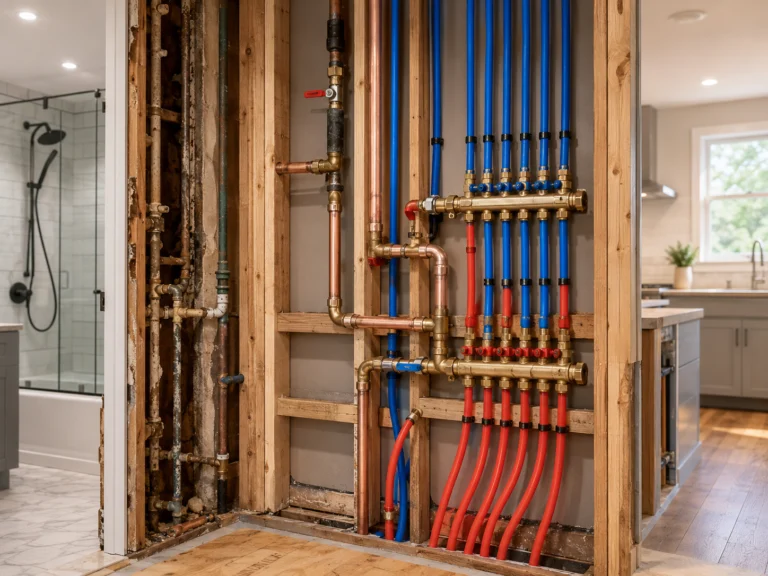
A new line from meter to house. This is the answer for galvanised steel, for a line that has failed more than once, and generally for anything old enough that the next leak is a question of when.
Trenchless replacement
Where conditions allow, a new line is pulled through with entry and exit pits instead of an open trench. It costs more per foot and far less in driveway, so it wins on hardscape and loses on open lawn.

The comparison people actually need is cost of repair now against cost of repair again in two years plus the landscaping twice. On a galvanised line that maths is not close.

What It Costs

Detection visit
$150 – $500
Flat, credited toward the repair
Spot repair
$1,500 – $3,500
Depends on depth and what is above it
Main line replacement
$2,000 – $4,500
Typical residential run
Whole-house repipe
$6,000 – $15,000
If the interior lines go too

What is above the line is the biggest single variable. The same length of pipe under lawn and under a stamped-concrete driveway are not the same job, and the difference is mostly restoration rather than plumbing.

Wet patch in the yard? We locate it before anyone digs anything.
Get a written quote

How We Find a Leak on a Buried Line

Six steps, and the digging only happens at the end of them.
1
Confirm it is losing water
The meter test first. If the meter is still turning with the house isolated, water is leaving the system, and that is a fact rather than a suspicion.
2
Isolate the main from the house
Shutting the valve where the line enters the building splits the problem in two. Still turning means the leak is on the buried run.
3
Trace the route
A buried line is rarely where people assume it is. Tracing it first means the search, and any digging, happens along the actual path.
4
Listen along the run
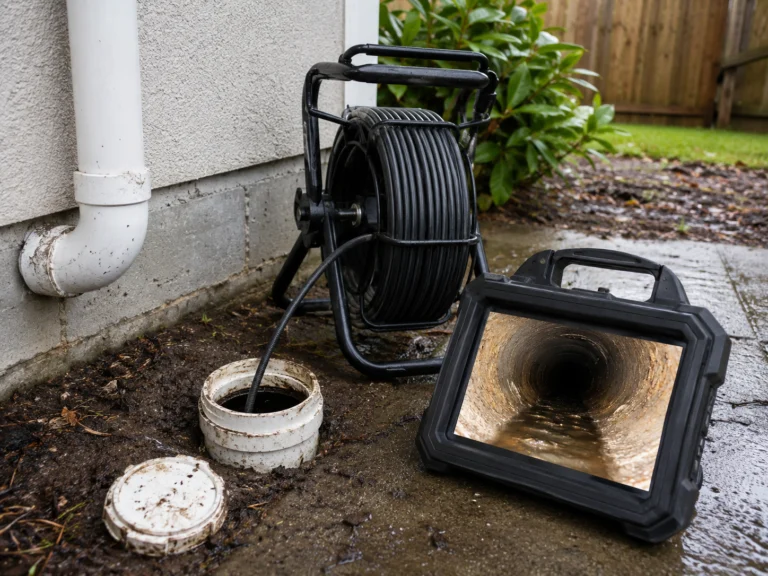
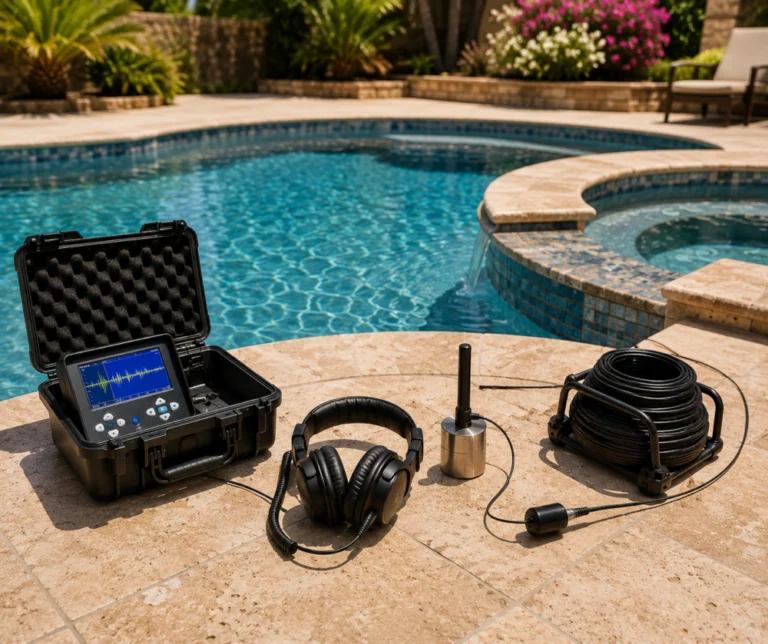
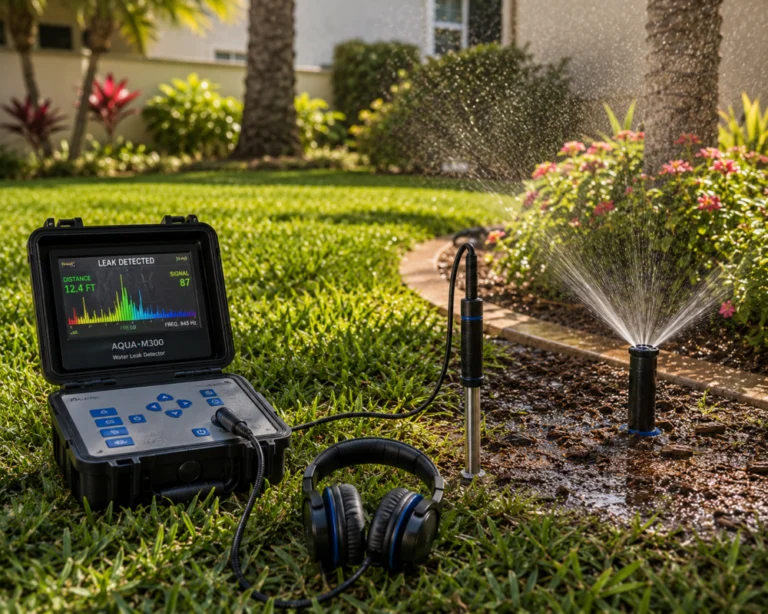
Ground microphones pick up the sound of water escaping under pressure. Soil, depth and what is on the surface all change how it reads, which is why this is experience rather than a gadget.
5
Confirm with tracer gas where needed
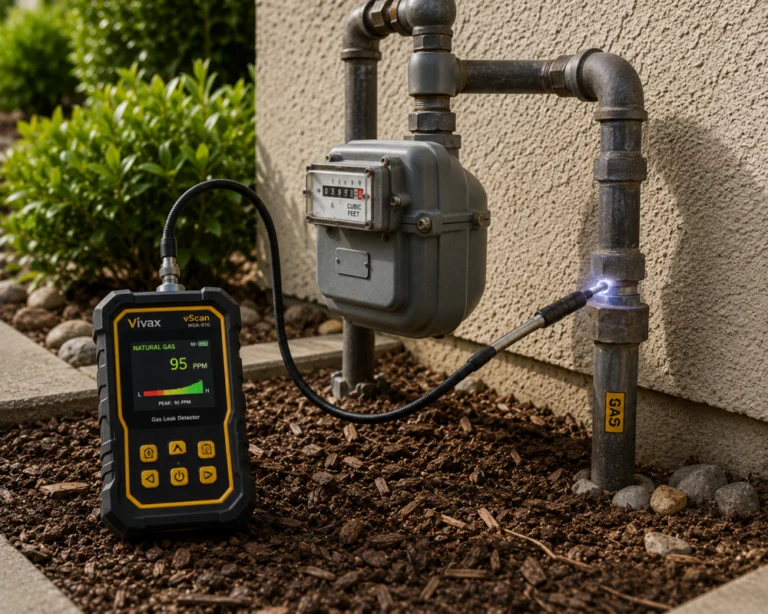
On a deep line, or under concrete, acoustic alone can be ambiguous. Tracer gas narrows a probable area down to a spot.
6
Mark it, then quote it
One marked point, a written report, photographs, and a quote, before any shovel comes off the van.

The homeowner version of the first two steps is on how to find an underground water leak. Doing them before you call genuinely shortens the visit.

Permits and the Utility

Plumbing work that is regulated by code needs a permit from the City of Santa Ana. Where a permit applies to your job we pull it, and it appears on your quote rather than arriving as a surprise. The City’s Permit Counter is (714) 647-5800 if you want to confirm anything independently.

  • We pull the permit where one is required. It is our licence on the line
  • Permit costs are shown on the quote, not folded into a round number
  • Underground work gets utility marking arranged before excavation
  • California 811 marks utility-owned lines only, up to the meter, private lines beyond it are located separately
Worth knowing That last point catches people out. A free 811 mark-out does not mean everything underground has been found; it means the utilities have marked what they own. Anything on your side of the meter, irrigation, a pool line, a run to a detached garage, needs a private locate, and that is part of what we do before we dig.

Trenchless or Open Trench

When the whole line is being replaced, the route decides the method more than the budget does.

Open trenchTrenchless
What happensA trench along the runEntry and exit pits, line pulled through
Best whenOpen lawn, shallow line, short runDriveways, patios, mature landscaping
Surface damageThe full length of the runTwo pits
Cost of the plumbingLowerHigher
Cost of putting it backHigher, sometimes muchLower
Ruled out byLittle. It almost always worksSharp bends, obstructions, some soils

The honest summary: on open lawn, an open trench is usually cheaper all in. Under a stamped driveway it rarely is. We price both where both are genuinely available, because the comparison only means something with the restoration in it.

What This Site Is About, and What Belongs to Another Trade

We are licensed and insured plumbers, and this site is about leaks, finding the ones you cannot see and repairing them properly. Roughly half of what looks like a plumbing leak turns out not to be one, so the boundary is worth stating plainly.

Roof leaks are a roofer. Water under an air handler is an HVAC technician clearing a condensate drain. Water under an appliance is appliance repair. Drying, restoration and mold are separate trades again, and gas line repair is SoCalGas or a licensed gas fitter. We detect gas leaks, we do not repair gas lines.

The full list, with the trade to call for each, is on what we don’t do.

Your Yard, Afterwards

This is the part of a main line job people worry about, and it deserves a straight answer rather than a reassurance.

  • We backfill and compact what we opened, and we grade it back level
  • Turf that was lifted goes back where it can; turf that was destroyed does not regenerate because we say so
  • Hardscape, concrete, pavers, stamped work, is patched, not matched. Matching aged concrete is a specialist job and we say so instead of trying
  • Planting, irrigation reinstatement and finish landscaping are named as exclusions on the quote
  • Photographs before and after, so there is a record of what the yard looked like when we arrived

Naming the exclusions up front costs us the occasional job against a quote that does not mention them. That trade is deliberate, the alternative is a conversation on the last day about who pays for the driveway.

What You Get, Every Time

The leak located first
Nobody digs a trench to go looking. The line is traced and the leak marked before any excavation is quoted.
The ownership question answered
In writing, with the meter as the reference point, so you know whether this is your bill at all.
A written, itemised quote
Including restoration and permit, with the exclusions named.
Two-year workmanship warranty
On the repair we performed, transferable with the property.
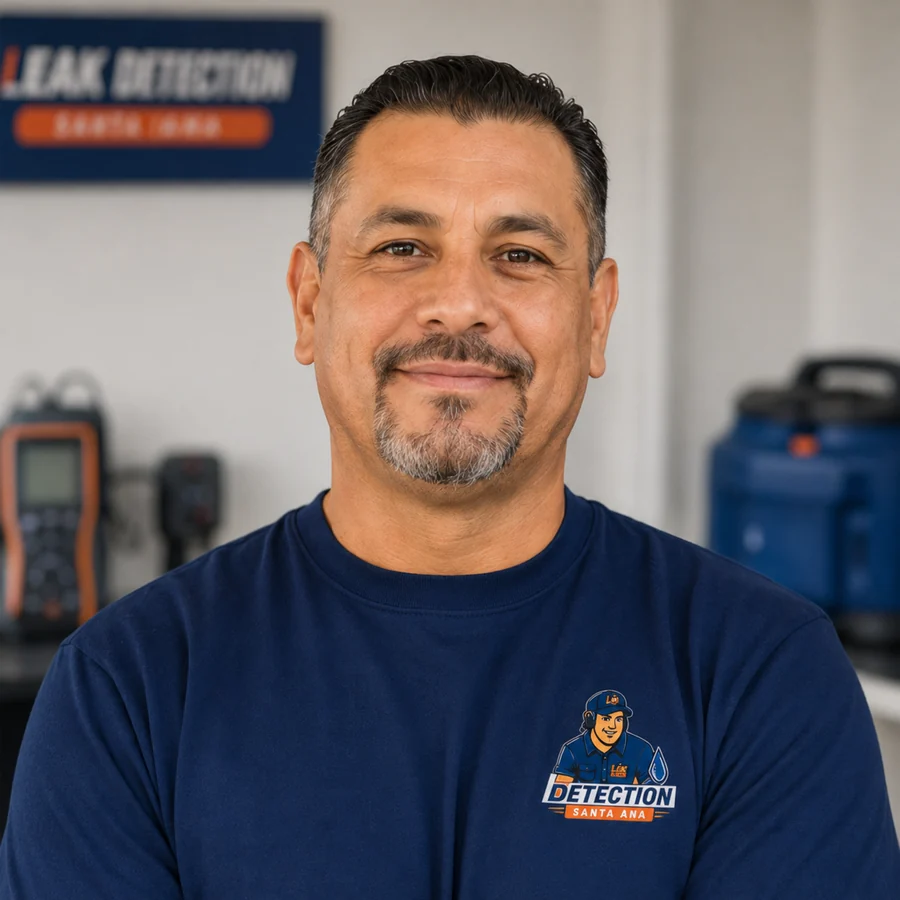
David Herrera, Founder & Lead Leak Detection Technician
About the Author
David Herrera, Founder & Lead Leak Detection Technician
David founded Leak Detection Santa Ana in 2026 after more than 15 years finding and repairing leaks across Orange County. He leads the crew that does the work, and the judgement calls on this page are the ones he uses in the field. Meet the team.

Get a Free On-Site Quote

Wet yard or a bill that jumped? We trace the line and locate the leak before anyone digs.

(714) 386-7923Call or text, day or nightSchedule a Visit

What’s Included

  • Acoustic, thermal & tracer-gas location
  • Plain-language explanation of what we found
  • Firm written quote, on-site
  • No-find-no-fee guarantee

Frequently Asked Questions

The meter is the boundary. The City of Santa Ana owns the main in the street, the service line to the meter, and the meter itself. From the meter to your house is the property owner’s. If the leak is on the City’s side, report it on (714) 647-3380 and do not pay a plumber for it.

A spot repair typically runs $1,500 to $3,500 and a full replacement $2,000 to $4,500 for a typical residential run. What sits above the line — lawn, pavers, a concrete driveway — moves the number more than the pipe itself does.

Not to find the leak. The line is traced and the leak located first, so any excavation is at one known point rather than along the run. Where a full replacement is needed, trenchless methods can sometimes avoid an open trench entirely. It depends on the route and what is in the way.

The meter test separates them. Shut the valve where the line enters the house, then watch the meter: still moving means the leak is between the meter and that valve, which is the main line. That is a five-minute test you can run yourself.

Because the line runs under it and has been watering it. A green or soft strip in the shape of a trench is one of the more reliable outdoor signs of a main line leak, and it usually shows before any pooling does.

For part of it, yes — there is no way to replace a section of the only line into the house without shutting it. We tell you roughly how long before we start, and we plan the work so the shut-off window is one block rather than several.

Plumbing work regulated by code requires a permit from the City of Santa Ana. Where one applies we pull it and it shows on the quote. The City’s Permit Counter is (714) 647-5800 if you want to check independently.

Not on its own. California 811 marks utility-owned lines up to the meter. Anything on your side — irrigation, a pool line, a run to a detached garage — is a private locate, and that is part of what we do before excavating.

If the line is galvanised steel, or if it has already failed once, replacement is usually the cheaper answer over any horizon longer than a couple of years, because the landscaping gets paid for twice otherwise. Copper or plastic with a specific one-off cause is a spot repair.

A spot repair is commonly a single day. A full replacement depends on length, depth and what has to be crossed; the schedule is on the written quote before anything starts.