Mon–Sat 7am–6pm · 24/7 Emergency Line
Serving Santa Ana & Central OC

CORE SERVICE · SANTA ANA & CENTRAL ORANGE COUNTY

Hydrostatic Testing in Santa Ana, CA

A hydrostatic test answers a question a camera cannot: does the drain and sewer system hold water? The line is plugged, filled, and the level is watched. It either holds or it does not, and you get that in writing, which is exactly what a buyer, a seller or an adjuster needs.

Hydrostatic Testing in Santa Ana, CA

What a Hydrostatic Test Is

Drains are not pressurised in normal use, which is why a leak in one is so hard to prove. A hydrostatic test creates the pressure artificially: the system is sealed and filled with water, and then physics does the rest.

1
A test ball is set at the cleanout
An inflatable plug seals the line at the point where it leaves the house, isolating everything upstream of it.
2
The system is filled
Water is introduced until it reaches the correct level, typically to the slab or floor level, so the whole under-slab system is loaded.
3
The level is marked
Physically. Everything after this is a comparison against that mark.
4
The level is watched
Over a set period. A system that holds shows no drop. A system that loses water is losing it somewhere, and that somewhere is under your house.
5
The result is recorded
Pass or fail, with photographs and the duration, the document that makes it useful to somebody who was not standing there.
6
If it fails, the leak gets located
The test says there is a leak. Finding it is a separate step, using a camera and isolation testing to narrow it to a section.

Camera or Hydrostatic — They Answer Different Questions

Camera inspectionHydrostatic test
Question answeredWhat does the pipe look like?Does the system hold water?
FindsRoots, cracks, offsets, bellies, collapseAny loss of water, anywhere
MissesA leak with no visible defectWhere the leak is
ResultFootage you can watchPass or fail
Best forDiagnosing a known problemProving a system, for a sale or a claim
Under a slabShows conditionProves integrity

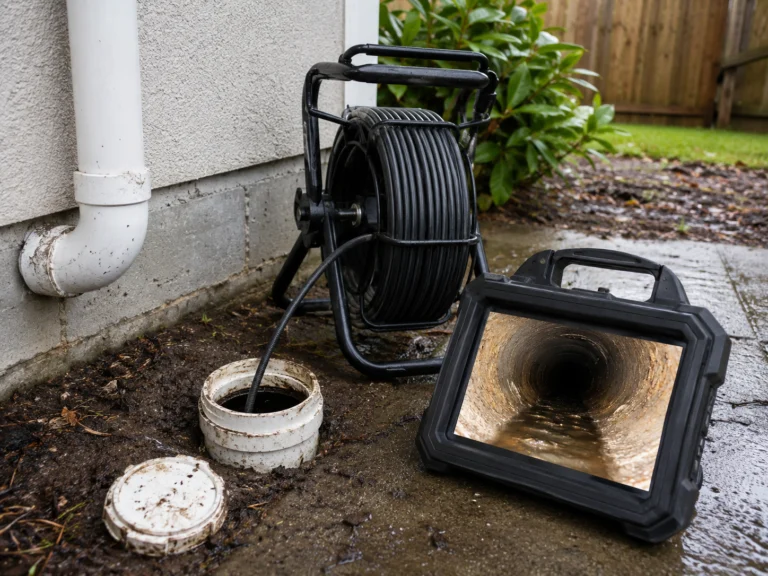
Run together they cover each other’s blind spots, which is why a thorough pre-purchase inspection on an older house often includes both. See sewer camera inspection.

When You Actually Need One

Buying an older house
A camera shows the pipe’s condition; a hydrostatic test proves it holds. On a slab home built before the 1980s, a failed under-slab drain is one of the largest unpleasant surprises available, and this is how you retire that risk before closing.
Selling, and getting ahead of it
A passed test in hand is a negotiating position. A buyer’s inspector finding a problem three days before closing is not.
An insurance claim
Adjusters want proof rather than opinion. A dated pass or fail with photographs is the kind of evidence a claim can actually rest on.
Foundation movement
When a structural engineer wants to know whether a leaking drain is contributing to soil movement under the slab, this is the test that answers it.

What It Costs, and Why It Is Charged Either Way

Hydrostatic test
$250 – $500
Charged whether it passes or fails
Camera inspection
$250 – $500
Often run alongside
Detection visit
$150 – $500
If a fail needs locating
Spot repair
$1,500 – $3,500
Depends on depth and access

This is the one place our no-find-no-fee guarantee does not apply, and the reason is worth stating rather than hiding. On a leak detection call you are paying us to answer “where is it?” — no answer, no fee. On a commissioned hydrostatic test you are buying the test itself and the report. A pass is the result you hoped for and it is a real deliverable, so it is charged.

It is the same distinction that applies to a camera inspection. Everything we price is on the pricing page.

Buying a slab home? Test the drains before the contingency closes.
Book a hydrostatic test

What a Failed Test Means

A fail is not a verdict on the whole system. It means water left it somewhere, and the next job is narrowing where.

Then whatHow
Isolate section by sectionRe-test smaller portions to find which one loses
Camera the failing sectionLook for the defect now that the area is known
Locate and markA transmitting camera head gives position and depth
Quote the repairSpot repair, lining or replacement, in writing

The cost gap between those repairs is large, which is why narrowing matters more than reacting. A single failed joint at twelve feet under a lawn and a deteriorated run under a finished floor are both “a failed hydrostatic test” and they are not remotely the same invoice.

Why an Under-Slab Drain Leak Is Worth Proving

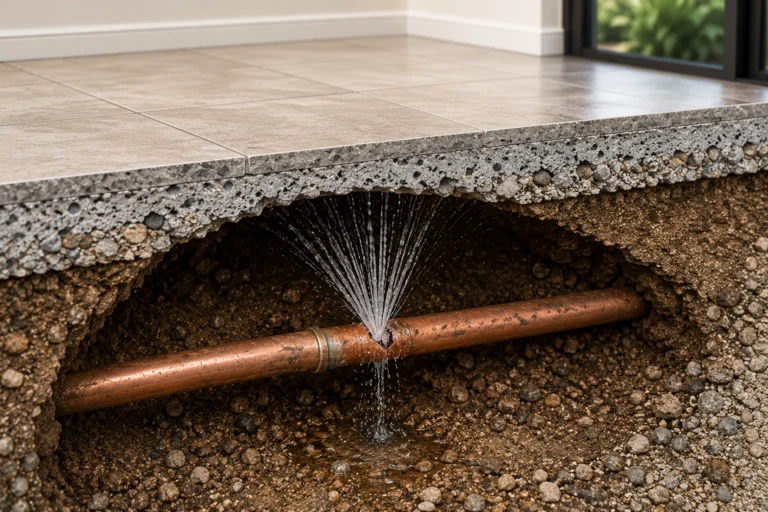
Supply leaks announce themselves. They are pressurised, they run constantly, and they show up on the water bill within a cycle or two. A drain leak under a slab does none of that, and the difference is the whole argument for testing.

Supply leakUnder-slab drain leak
Pressurised, runs 24 hours a dayOnly leaks when something drains
Shows on the water billCosts nothing on the bill, the water was used anyway
Often audibleSilent
Frequently produces a warm spotNo thermal signature at all
Acoustic detection finds itAcoustic detection cannot — no pressure to listen to
Damage shows up as wet flooringDamage shows up as soil washing out under the slab

Read the right-hand column together and the picture is a leak with no symptom, discharging waste water into the ground under your foundation for years. That is why the test exists and why a house can pass every other check and still have one.

What Can Go Wrong With the Test Itself

Two things, and an honest page says both.

  • A very old, already-damaged line can be stressed by the test. Filling a system that has deteriorated badly puts load on it that normal use does not. It is uncommon, it is not a reason to avoid testing, and it is a reason to camera first on a line you already suspect is in poor condition
  • A test ball can lodge or damage an old cleanout. Properly sized and properly inflated, it does not, but a fragile cast cleanout in a 1955 house deserves being looked at before something is pushed into it
  • Both risks are managed by inspecting before testing, which is why the inspection is part of the job rather than an extra

If we think a test is likely to do more harm than good on your specific line, you will be told that instead of being sold one.

What This Site Is About, and What Belongs to Another Trade

We are licensed and insured plumbers, and this site is about leaks — finding the ones you cannot see and repairing them properly. Roughly half of what looks like a plumbing leak turns out not to be one, so the boundary is worth stating plainly.

Roof leaks are a roofer. Water under an air handler is an HVAC technician clearing a condensate drain. Water under an appliance is appliance repair. Drying, restoration and mold are separate trades again, and gas line repair is SoCalGas or a licensed gas fitter. We detect gas leaks, we do not repair gas lines.

The full list, with the trade to call for each, is on what we don’t do.

What You Get, Every Time

A plain pass or fail
Not an impression. The level either held or it did not.
A written, dated report
With the duration and method, the form an adjuster or an escrow file can use.
Photographs
Of the setup, the marked level and the result.
What to do next, if anything
Including the honest answer that a passed system needs nothing.

Booking One Around a Sale

Most of these are commissioned against a deadline, so the practical points matter.

  • Book inside the inspection contingency, not after it — the result is only useful while there is still time to act on it
  • Water needs to be on at the property, which is worth confirming on a vacant house
  • A cleanout has to be accessible; if there is not one, access is through a pulled toilet and that takes longer
  • Allow a few hours, and longer if a camera inspection runs alongside
  • The report goes to whoever you nominate. You, your agent, or both

If you are the seller, running it before listing is worth considering. A known result you have priced into the asking figure is a very different conversation from one discovered by somebody else during escrow.

David Herrera, Founder & Lead Leak Detection Technician
About the Author
David Herrera, Founder & Lead Leak Detection Technician
David founded Leak Detection Santa Ana in 2026 after more than 15 years finding and repairing leaks across Orange County. He leads the crew that does the work, and the judgement calls on this page are the ones he uses in the field. Meet the team.

Book a Hydrostatic Test

A plain pass or fail on your drain system, documented for a sale or a claim.

(714) 386-7923Call or text, day or nightSchedule a Visit

What’s Included

  • The test run to standard, start to finish
  • Pass or fail stated plainly, in writing
  • Photographed record of the test
  • Report suitable for a sale or a claim

Frequently Asked Questions

The drain system is sealed at the cleanout with a test plug, filled with water to floor level, and the level is marked and watched. If it drops, water is leaving the system somewhere under the house. If it holds, the system is sound.

No, and they answer different questions. A camera shows what the pipe looks like; a hydrostatic test proves whether it holds water. A line can look acceptable on camera and still fail a hydrostatic test, which is why both together are the thorough option.

$250 to $500, charged whether the system passes or fails. You are buying the test and the report rather than a result — a pass is a genuine deliverable and it is often exactly what you commissioned it for.

Because the two are different transactions. On a leak detection call you are paying us to find something, so no find means no fee. On a commissioned test you are paying for the test and the written result, and that gets delivered either way.

Allow a few hours, and longer if a camera inspection runs alongside. The watching period is the part that cannot be shortened, because a slow loss is precisely the thing a rushed test would miss.

On an older slab home, it is one of the more worthwhile inspections available — a failed under-slab drain is expensive and invisible. Book it inside the inspection contingency, while the result can still change the deal.

It puts load on the system that normal use does not, so a line that is already badly deteriorated can be stressed by it. It is uncommon. On a line we already suspect is in poor condition we camera it first, and if a test looks likely to do more harm than good we will say so rather than sell you one.

The test proves a leak exists; it does not say where. The next step is isolating sections and re-testing to narrow it down, then a camera on the failing section to see the defect. Only then is a repair worth quoting.

It makes the job straightforward. Without one, access is usually through a pulled toilet, which takes longer and is quoted accordingly. We tell you which access we need before arriving rather than after.

It is written for that purpose: dated, with the method, duration, photographs and a plain pass or fail. We send it to whoever you nominate. What we cannot do is tell you how a particular adjuster or lender will weigh it.