Mon–Sat 7am–6pm · 24/7 Emergency Line
Serving Santa Ana & Central OC

CORE SERVICE · SANTA ANA & CENTRAL ORANGE COUNTY

Epoxy Pipe Lining in Santa Ana, CA

Lining creates a new pipe inside the old one without digging it up. On the right line it is an excellent answer, and it is sold as an answer to considerably more than it actually solves. This page is about where it works, where it does not, and what to ask before you sign anything.

Epoxy Pipe Lining in Santa Ana, CA

What Lining Actually Is

Two related methods get called the same thing, and they are not interchangeable. Knowing which one is being quoted to you is the first useful question.

Cured-in-place lining (CIPP)
A resin-saturated felt liner is pulled or inverted into the existing pipe, inflated against the wall, and cured. The result is a structural pipe inside the old one. This is the method used on sewer and drain lines and it is the one that does real structural work.
Epoxy coating
Epoxy is blown through a cleaned and dried line to coat the inner surface. It seals pinholes and creates a barrier between the water and the metal. It is a coating rather than a new pipe, and it does not add structure.
Pipe bursting
Not lining at all, though it gets grouped with it. The old pipe is fractured outward and a new one pulled through behind the head. Full replacement, minimal excavation. See trenchless sewer repair.
Worth knowing If somebody is quoting you “epoxy”, ask which of the first two they mean and what diameter the finished bore will be. A liner takes up space inside the pipe, and on an already narrow line that matters.

Where Lining Genuinely Works Well

SituationWhy it suits lining
Sewer lateral under a drivewayThe excavation is the expensive part, and it is avoided
A line under mature landscapingSame argument — what is on top costs more than the pipe
Cracks and root intrusion at jointsA liner seals joints continuously along the run
Cast iron drains inside a buildingReplacing them means opening walls and floors
Multi-unit buildingsOccupied property where demolition is genuinely disruptive
A line still round and structurally intactThe liner needs a host pipe to form against

The common thread is not that the pipe is worse. It is that reaching the pipe is expensive. That is the honest case for lining, and where it applies it is a strong one.

Where It Does Not Work

This is the part that tends to be left out of the sales conversation.

  • A belly. A liner follows the shape of the pipe it is formed in. Line a dip and you get a lined dip that still holds water
  • A collapsed section. There is nothing left to form against
  • Severe offsets. The liner cannot bridge a step of any size
  • Badly deteriorated pipe. CIPP needs a host; epoxy coating needs sound metal underneath it
  • Already narrow lines. The liner takes up diameter. On a marginal bore that is a real trade-off
  • Wrong grade. If the line was laid at the wrong fall, lining it preserves the mistake perfectly

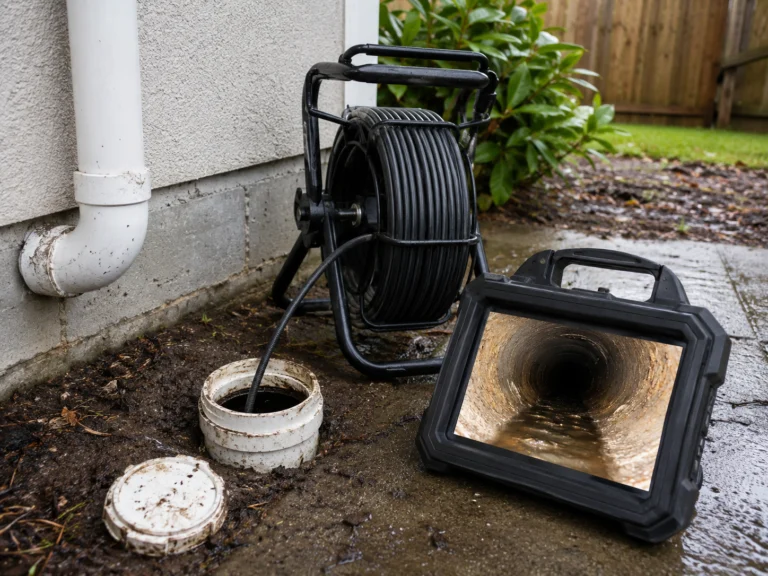
Every one of those is visible on camera beforehand, which is exactly why nobody should quote lining without footage. If a quote arrived without a video, ask for one.

Lining or Repipe, on Supply Lines

On drains, lining competes with excavation. On supply lines: the pressurised copper in your walls. It competes with a repipe, and the comparison is different.

Epoxy coatingRepipe
What you end up withOld pipe with a coating insideNew pipe
DisruptionLower — less wall openingHigher
Addresses corrosion already presentCoats over itRemoves it
If it fails laterBack to the original problemNew pipe, reachable
Adds capacityNo — slightly reduces boreCan, if sized up
Typical costBetween a repair and a repipe$6,000 – $15,000

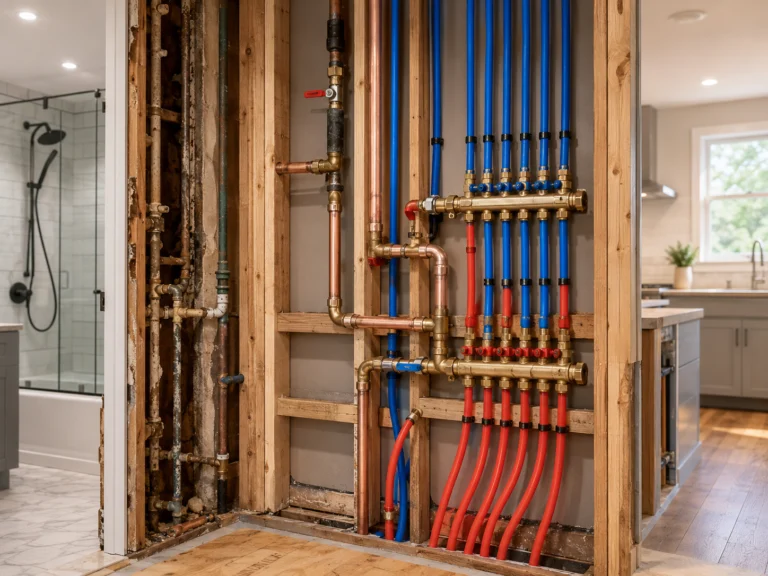
Our own position, stated plainly: on residential supply lines that have started failing from age and water chemistry, we generally recommend a repipe. New pipe in reachable places is a more durable answer than a coating inside old pipe, and the disruption difference is smaller than it sounds once PEX and rerouting are on the table. See whole house repipe.

What It Costs

Camera inspection
$250 – $500
Required first — nobody should quote without it
Spot repair
$1,500 – $3,500
The alternative on a single defect
Trenchless sewer repair
$4,000 – $12,000
Lining or bursting, by length
Full sewer replacement
$6,000 – $20,000
Open trench, by length

Lining is priced by the foot and by diameter, and the access pits and cleaning are a real part of the cost rather than a rounding error. What makes it worth it is the restoration you avoid, which means the comparison only makes sense with the driveway, the deck or the landscaping in it.

Everything we price is on the pricing page.

Been quoted lining? Get the footage and a second opinion before you sign.
Book a camera inspection

Why Cleaning Is the Step That Decides the Job

Every lining failure we have been called out to look at afterwards traces back to the same place, and it is not the resin.

What was skippedWhat happens
Roots not fully cut backThe liner forms around them and they keep growing
Scale left on the wallNothing to bond to: the liner separates
Debris in a low spotThe liner forms over it, permanently
No second camera after cleaningDefects the debris was hiding never get seen
Line not properly dried, where requiredThe cure is compromised before it starts

Cleaning is unglamorous, it takes time, and it is invisible in the finished job, which is exactly why it is where corners get cut on a competitive quote. If two prices are far apart on the same run, this is usually the difference, and asking about it directly tends to be revealing.

Questions to Ask Before You Sign

Can I see the video?
Yes is the only acceptable answer, and you should watch it with them explaining what you are looking at. Nobody should be quoting a lining job blind.
Is there a belly anywhere in the run?
If the answer is yes and lining is still being recommended, ask directly how the liner is supposed to correct the fall. There is no good answer.
What is the finished internal diameter?
The liner takes up space. On an already narrow line that can matter, and a contractor who has not thought about it has not thought about your line.
What exactly does the warranty cover?
Read it. A warranty on the liner is not a warranty on the pipe around it, and the distinction is where disputes come from.

More on evaluating a contractor generally in how to choose a leak detection company.

What the Job Involves

1
Camera the line first
Full length, recorded. This decides whether lining is even a candidate, and you keep the footage.
2
Clean the pipe thoroughly
Roots, scale and debris out. A liner formed against a dirty pipe is a liner that will not bond, and cutting this step is the most common way the method fails.
3
Camera it again
After cleaning, because a cleaned pipe frequently reveals defects the debris was hiding.
4
Install the liner
Pulled or inverted into place and inflated against the pipe wall.
5
Cure it
Ambient, hot water, steam or UV depending on the system. Cure time is not a place to hurry.
6
Reinstate connections and camera a third time
Any branch connections reopened, and the finished line inspected. You get that footage too. It is the proof the job was done.

What This Site Is About, and What Belongs to Another Trade

We are licensed and insured plumbers, and this site is about leaks — finding the ones you cannot see and repairing them properly. Roughly half of what looks like a plumbing leak turns out not to be one, so the boundary is worth stating plainly.

Roof leaks are a roofer. Water under an air handler is an HVAC technician clearing a condensate drain. Water under an appliance is appliance repair. Drying, restoration and mold are separate trades again, and gas line repair is SoCalGas or a licensed gas fitter. We detect gas leaks, we do not repair gas lines.

The full list, with the trade to call for each, is on what we don’t do.

What We Would Tell a Friend

Since this page exists mainly to help you evaluate a quote somebody else has given you, here is the short version.

  • On a sewer lateral under hardscape with cracks or roots and no belly — lining is a good answer and often the best one
  • On a line with a belly, a collapse or serious offsets. It is the wrong method, whatever the quote says
  • On residential supply lines. We would repipe, and we would rather tell you that than sell you a coating
  • In an occupied multi-unit building: the disruption argument is real and worth weighing seriously
  • Whatever you are quoted, get the footage. It is your line

If that reads as talking ourselves out of work in places, it is. The alternative is selling somebody a method their line is not suited to, and that comes back.

David Herrera, Founder & Lead Leak Detection Technician
About the Author
David Herrera, Founder & Lead Leak Detection Technician
David founded Leak Detection Santa Ana in 2026 after more than 15 years finding and repairing leaks across Orange County. He leads the crew that does the work, and the judgement calls on this page are the ones he uses in the field. Meet the team.

Get a Straight Second Opinion

Been quoted lining? Get the camera footage and an honest read on whether it fits your line.

(714) 386-7923Call or text, day or nightSchedule a Visit

What’s Included

  • Written, itemised quote before we start
  • Repair options explained, not just one
  • Two-year workmanship warranty
  • Photographs of the completed work

Frequently Asked Questions

Two things get called it. Cured-in-place lining pulls a resin-saturated liner into the pipe and cures it into a structural pipe within a pipe. That is the sewer and drain method. Epoxy coating blows epoxy through a cleaned line to coat the inside, which seals pinholes but adds no structure.

On the right line it is genuinely comparable and far less disruptive. On the wrong line it is not, and the difference is visible on camera beforehand: a belly, a collapse or serious offsets all rule it out.

No. A liner forms against the pipe it is installed in, so lining a dip produces a lined dip that still holds water. Correcting a belly means excavating and re-laying to grade. If somebody quotes lining for a belly, ask them how the fall gets corrected.

Our recommendation on residential supply lines is generally a repipe. New pipe in reachable places is a more durable answer than a coating inside old pipe, and with PEX and rerouting the disruption gap is smaller than it sounds.

Trenchless work including lining typically runs $4,000 to $12,000 depending on length and diameter, against $6,000 to $20,000 for a full open-trench replacement. The comparison only means something with the restoration cost included.

Yes, slightly, the liner occupies wall thickness. On most sewer laterals that is immaterial. On an already marginal bore it is a real consideration, and it is a fair question to put to anyone quoting the work.

Always, and no honest quote exists without one. The camera is what determines whether lining is even a candidate. Ask for the footage and keep it. It is your line.

A residential lateral is commonly a one to two day job including cleaning and curing. Cleaning properly is what takes the time, and it is also the step most likely to be rushed — a liner formed against a dirty pipe does not bond.

We are not going to repeat a manufacturer’s number as though we had verified it. What is worth knowing is that a properly cleaned, properly cured liner in a sound host pipe is a durable repair, and that a rushed one is not. Read the warranty and note what it covers.

Far less than an open trench. That is the point. Access pits at each end rather than a trench along the run, which is what makes it attractive under driveways, patios and established landscaping.