Mon–Sat 7am–6pm · 24/7 Emergency Line
Serving Santa Ana & Central OC

LEAK GUIDE · SANTA ANA & CENTRAL ORANGE COUNTY

Is It Condensation or a Leak?

Condensation is water that came out of the air, not out of a pipe. It looks identical to a slow leak, it appears in exactly the places people expect leaks, and it needs no repair at all. Telling the two apart takes about a day and costs nothing.

Is It Condensation or a Leak?

The Quick Test

1
Dry the surface completely
The pipe, the tank, the wall, whatever is wet. Towel it dry and make sure it is properly dry, not damp.
2
Wrap it or mark it
Tape a piece of dry paper towel around the pipe, or tape a square of plastic tightly over a damp patch on a wall or floor, sealed at the edges.
3
Wait a few hours
Longer is better. A full day is ideal.
4
Look at which side is wet
Water on the outside of the plastic, or on the outside of the wrap, means it came from the room air, condensation. Water on the inside, against the surface, means it came from behind or within, a leak.
Worth knowing That inside-or-outside distinction is the whole test, and it works on walls, floors, pipes and tanks alike. It is the same principle plumbers use, it needs nothing but tape and plastic, and it settles most cases in a day.

What Condensation Actually Is

Air holds water vapour, and how much it can hold depends on temperature. Cool that air below the point where it can hold what it is carrying, and the excess comes out as liquid on whatever did the cooling.

  • A cold water pipe in a warm room is a cooling surface, so water forms on it
  • The same thing happens on a toilet tank, a cold-water line in a crawl space, and the outside of an air-conditioning duct
  • It gets dramatically worse in summer, because warm air carries more moisture
  • It gets worse after showers, cooking and laundry, because those add moisture indoors
  • It is worst where air does not move, cupboards, crawl spaces, behind furniture

None of that is a fault. It is physics behaving normally in a building that is a little more humid than it wants to be.

Telling Them Apart Without Any Test

CondensationA leak
Worse in summer and on humid daysSame all year
Water is on the surface of the pipe, all around itWater originates at one point
Beads or a film, evenly distributedDrips or runs from a specific spot
Improves with ventilation or a dehumidifierUnaffected by either
Cold pipes onlyHot or cold, and hot lines leak too
Nothing on the water meterOften shows on the meter
Stops when the AC is offContinues regardless
Dries out and comes backPersistent, and usually grows

The meter row is the most decisive of them. Condensation takes water from the air, not from your supply, so it cannot register, run the meter test and a moving indicator settles it.

Where People Find Condensation and Call a Plumber

Under a sink
The cold supply line and the trap both sweat in a closed cupboard with no airflow. The cabinet base gets damp, then stained, then soft, which looks exactly like a slow leak from the fittings above it.
On a toilet tank
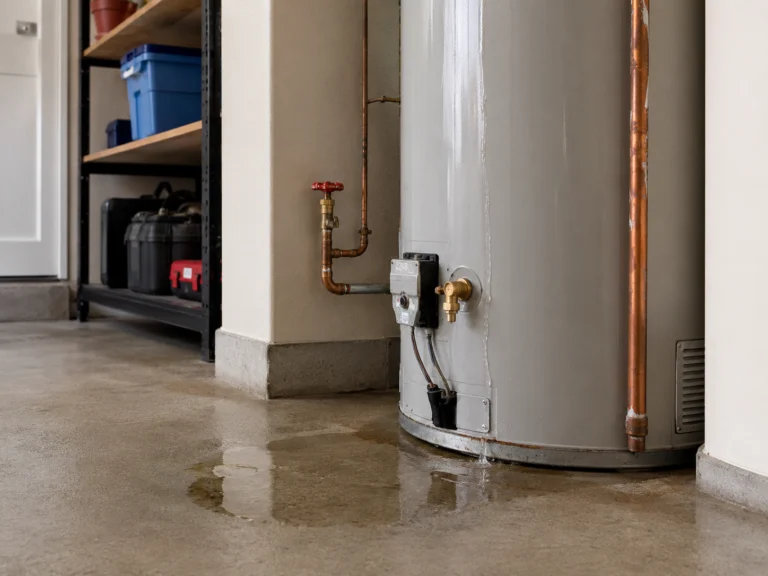
A tank full of cold water in a warm bathroom sweats freely, and the water runs down the porcelain to the floor. It puddles at the base of the toilet, which is also where a failed wax seal puddles.
In a crawl space or garage
Uninsulated cold lines sweat continuously through summer, and the drips land on the ground below. In a crawl space this raises humidity in the whole house.
On air conditioning ducts and equipment
Cold ductwork in a warm attic sweats along its whole length. This one is genuinely hard to distinguish from a condensate line problem, and both are HVAC rather than plumbing.

The Impostor That Is Not Condensation Either

Worth separating out, because it gets confused with both: HVAC condensate is not the same thing as condensation on a pipe.

CondensationHVAC condensate overflow
Where the water comes fromRoom air, on a cold surfaceThe air handler's drain pan
WhyHumidity plus a cold surfaceA clogged condensate drain line
VolumeBeads, films, slow dripsCan be substantial: a pan overflowing
WhenHumid days, all summerWhile the system runs, worse on humid days
The fixInsulation, ventilation, a dehumidifierClear the drain line — HVAC technician
Whose jobNobody's, usuallyHVAC

If water is arriving in quantity when the air conditioning runs, that is the condensate line rather than condensation, and it is a real problem with a real fix. It is still not plumbing.

What to Do About Genuine Condensation

  • Insulate the pipes. Foam pipe sleeve costs very little and stops the cold surface being exposed to room air at all. This is the actual fix
  • Improve airflow. Leave cupboard doors ajar occasionally, and do not pack a sink cabinet solid
  • Run the extractor fan. During and after showers, for long enough to clear the moisture rather than as a token gesture
  • Vent the crawl space. Existing vents kept clear, and a ground vapour barrier if there is not one
  • Dehumidify if the whole house is humid rather than one spot
  • Insulate the toilet tank or fit a mixing valve, if the tank is the problem

None of it needs a plumber. Pipe insulation in particular is a genuinely satisfying job: an afternoon, very little money, and the problem simply stops.

When to Stop Assuming It Is Condensation

The failure mode in the other direction is real: treating a slow leak as sweating for months while it soaks a subfloor.

SignWhy it points away from condensation
The meter moves with everything offCondensation takes no water from the supply
It is a hot-water pipeHot pipes do not condense. They are the warm surface
It happens in winter tooThe humidity is not there to drive it
The wet area is growingCondensation reaches a steady state; leaks do not
It smellsSupply water and condensation are both clean. A smell means a drain
The water bill went upAir is free
Water on the inside of the taped plasticIt came from behind the surface

Any one row on that list is enough to stop calling it condensation and start looking properly.

What This Site Is About, and What Belongs to Another Trade

We are licensed and insured plumbers, and this site is about leaks — finding the ones you cannot see and repairing them properly. Roughly half of what looks like a plumbing leak turns out not to be one, so the boundary is worth stating plainly.

Roof leaks are a roofer. Water under an air handler is an HVAC technician clearing a condensate drain. Water under an appliance is appliance repair. Drying, restoration and mold are separate trades again, and gas line repair is SoCalGas or a licensed gas fitter. We detect gas leaks, we do not repair gas lines.

The full list, with the trade to call for each, is on what we don’t do.

Does the Damage Matter Either Way?

A fair question, since condensation is not a fault. The honest answer is that persistent moisture is persistent moisture, whatever produced it.

  • A sink cabinet base that stays damp will delaminate and soften, eventually
  • A crawl space kept humid by sweating pipes raises humidity in the rooms above it
  • Mold does not care whether the water came from a pipe or from the air
  • Rust on fittings and hardware comes from either source equally
  • What differs is the fix: insulation and airflow rather than a repair

So it is worth dealing with. It is just worth dealing with cheaply and correctly, rather than by paying somebody to look for a leak that is not there.

If You Want It Settled Properly

Detection visit
$150 – $500
Flat, credited toward the repair
Spot repair
$1,500 – $3,500
Accessible, or under finished floor
Reroute
$2,000 – $4,500
Per line
Whole-house repipe
$6,000 – $15,000
PEX or copper

If you have run the tape test and the meter test and you still cannot tell, that is a reasonable point to have somebody look. Moisture mapping and thermal imaging distinguish surface moisture from water inside a structure quickly, and if the answer is condensation, you get that in writing and there is no detection fee.

Tape test inconclusive? We will tell you which it is, in writing.
Book a detection visit
David Herrera, Founder & Lead Leak Detection Technician
About the Author
David Herrera, Founder & Lead Leak Detection Technician
David founded Leak Detection Santa Ana in 2026 after more than 15 years finding and repairing leaks across Orange County. He leads the crew that does the work, and the judgement calls on this page are the ones he uses in the field. Meet the team.

Get a Free On-Site Quote

Still not sure? We distinguish surface moisture from water inside a structure.

(714) 386-7923Call or text, day or nightSchedule a Visit

What’s Included

  • Acoustic, thermal & tracer-gas location
  • Plain-language explanation of what we found
  • Firm written quote, on-site
  • No-find-no-fee guarantee

Frequently Asked Questions

Dry the surface, tape a square of plastic tightly over it, and wait a few hours. Water on the outside of the plastic came from the room air — condensation. Water on the inside, against the surface, came from behind it, a leak.

Because it is cooling the air touching it below the point where that air can hold its moisture, so the moisture comes out on the pipe. It is worst in summer, in still air, and in closed cupboards. Foam pipe insulation stops it.

No, and that is the most decisive test available. Condensation takes water from the air rather than from your supply. If the meter moves with everything shut off, you have a leak, not sweating pipes.

Either a sweating tank or a failed wax seal, and they look the same. A sweating tank is wet all over the porcelain and worse in summer. A failed seal produces water only at the base, often with a smell, and it does not care what the weather is doing.

No. Condensation forms on surfaces colder than the surrounding air, so a hot line is the warm surface rather than the cold one. Water on a hot-water pipe is a leak.

Not in itself. Persistent moisture is persistent moisture. A cabinet base that stays damp will soften, a humid crawl space raises humidity through the house, and mold does not care where the water came from. It is worth fixing — just cheaply.

Foam pipe insulation, which costs very little and simply removes the exposed cold surface. Alongside that: better airflow, running extractor fans properly, and a dehumidifier if the whole house is humid rather than one spot.

Related but different. An air handler produces condensate by design and drains it through a line; when that line clogs, the pan overflows. That is a real problem with a real fix, and it belongs to an HVAC technician rather than a plumber.

Strongly suggests condensation — leaks do not care what season it is. The exception is anything tied to air conditioning, which also only runs in summer. Run the tape test to separate them.

Not for condensation itself — insulation and airflow are the answer and neither needs us. Call if the tape test and the meter test leave you unsure, and if it turns out to be condensation you get that in writing with no detection fee.