Mon–Sat 7am–6pm · 24/7 Emergency Line
Serving Santa Ana & Central OC

LEAK GUIDE · SANTA ANA & CENTRAL ORANGE COUNTY

A Wet Spot in the Yard That Will Not Dry

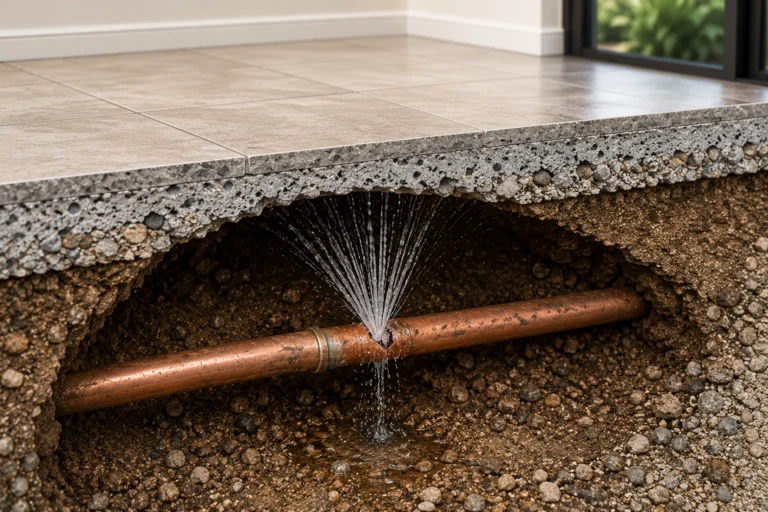
Ground that stays soft in one place, with no sprinkler and no rain to explain it, is water arriving from somewhere below. Usually the main water line, the irrigation, or the sewer lateral, and which of the three it is decides both the urgency and who pays for it.

A Wet Spot in the Yard That Will Not Dry

What the Wet Spot Is Telling You

What you noticeMost likely
Grass greener in a strip across the lawnThe main water line. It runs under it
Soft ground near the meter boxThe main line, or the City’s side of it
Wet patch that appears after the sprinklers runIrrigation: a lateral or a valve
Wet all the time, no irrigation nearbyA pressurised line, running continuously
A smell to itThe sewer lateral, different problem entirely
Wet only after rainDrainage and grading, not plumbing
Sunken or settling groundWater has been washing soil away for a while
Standing water on clay after wateringOften just poor drainage, clay sheds slowly
Worth knowing The smell row changes everything. Sewage surfacing in a yard is a health issue as much as a plumbing one, stop using water in the house and call rather than investigating it yourself.

The Free Test That Narrows It

1
Run the meter test
Every fixture off, irrigation off, then watch the meter’s leak indicator. Moving means a pressurised line is losing water — full method here.
2
Close the main valve on the house
The one where the supply enters the building, not the one at the meter.
3
Watch the meter again
Still turning means the leak is between the meter and that valve, the buried main line or something teed off it. Stopped means the leak is inside the house.
4
Shut the irrigation off for two days
At the controller and, if there is one, at the irrigation valve. Then retest. If the meter goes still, the leak is in the irrigation system.
5
If the meter never moved at all
Then no pressurised line is losing water, and the wet ground is a drain, a sewer lateral, groundwater or drainage, a completely different search.

Those four steps split the problem into the right category before anybody digs anything, and they cost nothing but a couple of days of patience.

Main Water Line: Whose Bill Is It?

Worth settling early, because one side of the meter is not yours to pay for.

SectionWhose responsibility
The water main in the streetCity of Santa Ana
The service line from the main to the meterCity of Santa Ana
The meter itselfCity of Santa Ana
From the meter to your houseProperty owner. You
Irrigation, pool and outbuilding linesProperty owner. You

If the wet ground is on the street side, report it to the City on (714) 647-3380 rather than paying a plumber. A wet patch right at the meter box is the ambiguous case and the common one, locating the leak precisely is what settles it. See main water line repair.

Irrigation: the Most Common Answer

It is the most likely explanation for a wet yard with a moving meter, and it is the cheapest to fix.

  • A valve that does not seat fully leaks continuously into the ground and shows no symptom except the bill
  • A cracked lateral line waters one area every time the zone runs, so the patch appears on a schedule
  • A broken or sunken head floods its immediate area during every cycle
  • A leak downstream of the valve only shows when that zone runs; upstream of it, constantly
  • Old poly and PVC laterals get brittle, and roots and shovels find them

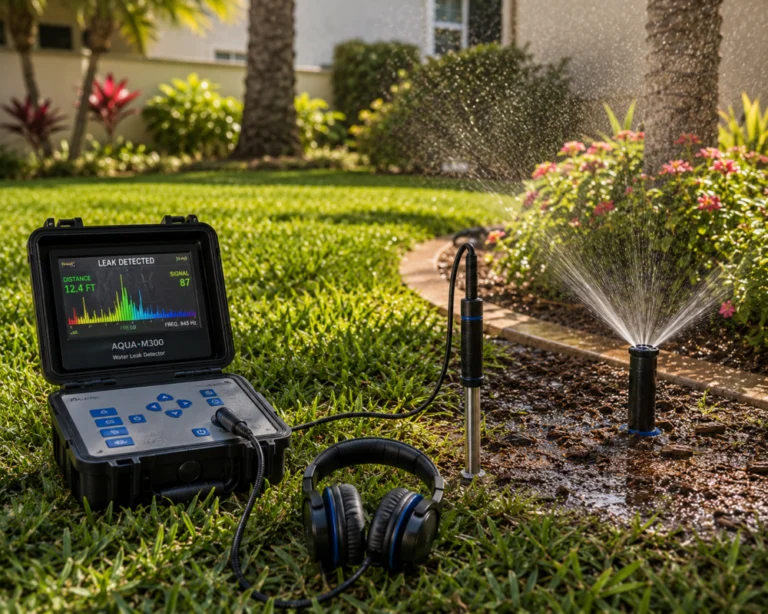
The timing tells you which. Wet only after a cycle is downstream of a valve; wet all the time is upstream of one, and that leaks day and night. More on it at irrigation and sprinkler leak detection.

Sewer Lateral: the One With a Smell

Different symptoms, different urgency, and it will not show on the meter at all: a drain is not pressurised, so the water was going down the pipe anyway.

SignWhat it means
A smell, particularly in warm weatherWaste water is surfacing
Ground wet along a line from house to streetThe lateral runs there
Grass unusually lush along that same lineIt is being fertilised, effectively
Drains inside running slow at the same timeThe lateral is compromised, not just leaking
Flies or a sudden pest interestThey find it before people do
Ground settling above the lineSoil is washing into a break

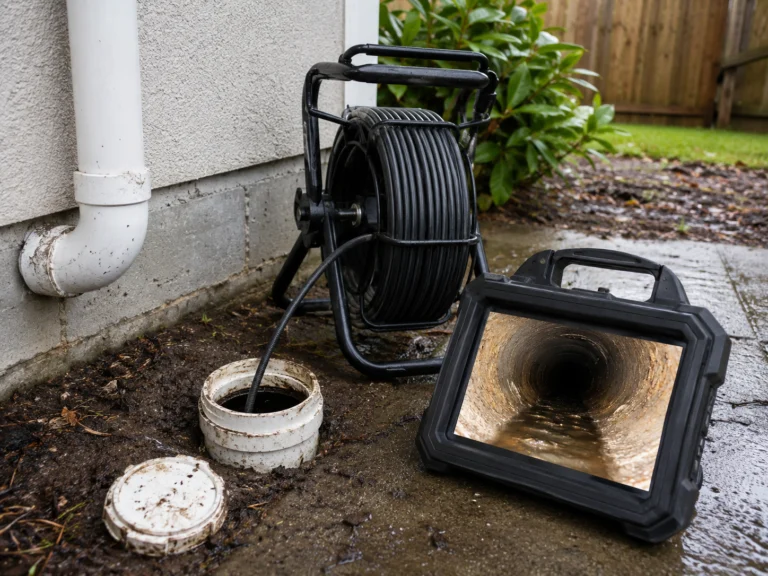
A camera inspection is what confirms it. See sewer camera inspection. Roots are the most common cause here: tree roots in a sewer line.

When It Is Not a Leak at All

Drainage and grading
Ground that slopes toward a low point collects water every time it rains or the irrigation runs, and clay soil sheds it slowly. If the patch appears after rain and dries out over days, this is usually it, and the fix is landscaping.
A downspout in the wrong place
A roof discharging into one spot puts an enormous volume of water there every time it rains. Follow your downspouts and see where they end.
A high water table or a spring
Uncommon, but real. Persistent damp in a low part of a property that predates anything you have done is worth a drainage contractor rather than a plumber.
A neighbour’s water
Irrigation, a pool backwash line or a leak next door can surface on your side of a fence. Worth walking the boundary before assuming it is yours.

How the Leak Gets Located

1
Confirm which system
The meter test, with irrigation isolated, decides between main line, irrigation and not-pressurised-at-all.
2
Trace the run
A buried line is rarely where people assume. Tracing it first means the search follows the actual path rather than a guess.
3
Listen along it
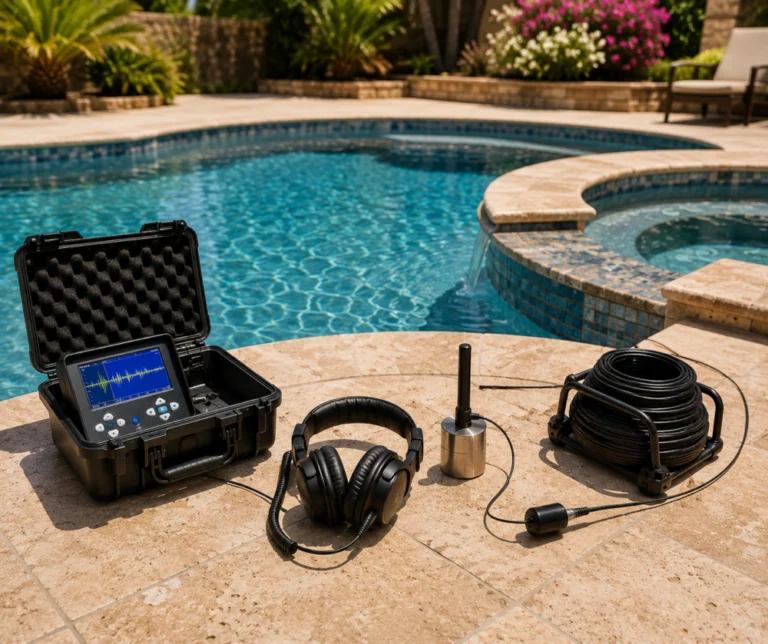
Ground microphones pick up water escaping under pressure. Soil type, depth and surface all change how it reads.
4
Confirm with tracer gas where needed
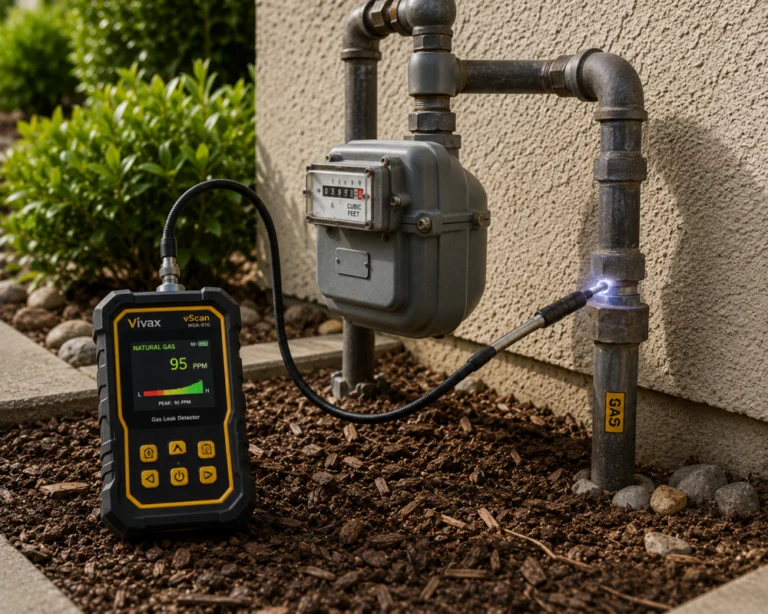
On deep lines or under hardscape, where acoustic alone is ambiguous.
5
Mark it and read the depth
One point, with a depth, so any excavation is a hole rather than a trench.
6
Quote it in writing
Including what the restoration involves, before anything comes off the van.

What It Costs

Detection visit
$150 – $500
Flat, credited toward the repair
Spot repair
$1,500 – $3,500
Accessible, or under finished floor
Reroute
$2,000 – $4,500
Per line
Whole-house repipe
$6,000 – $15,000
PEX or copper

On a buried line, what sits above it moves the number more than the pipe does. The same repair under lawn and under a stamped concrete driveway is the same plumbing and a very different invoice, which is exactly why locating precisely is worth paying for.

Ground soft with no explanation? Run the meter test, then we will trace the line.
Book a detection visit

What This Site Is About, and What Belongs to Another Trade

We are licensed and insured plumbers, and this site is about leaks — finding the ones you cannot see and repairing them properly. Roughly half of what looks like a plumbing leak turns out not to be one, so the boundary is worth stating plainly.

Roof leaks are a roofer. Water under an air handler is an HVAC technician clearing a condensate drain. Water under an appliance is appliance repair. Drying, restoration and mold are separate trades again, and gas line repair is SoCalGas or a licensed gas fitter. We detect gas leaks, we do not repair gas lines.

The full list, with the trade to call for each, is on what we don’t do.

Why Not Just Dig and Look

Digging blindLocating first
A trench along the suspected routeOne hole at a marked point
Landscaping disturbed the whole lengthLandscaping disturbed in one place
Depth discovered by the machineDepth known before starting
Utilities found the hard wayPrivate lines traced beforehand
Price is a range because the job is unknownFirm price because the job is defined

There is also a safety point. California 811 marks utility-owned lines up to the meter and nothing beyond it — your water line, sewer lateral, irrigation and any power to a detached structure are all unmarked. Call 811 before any digging regardless, then see pipe and line locating for the rest.

What to Do This Week

Run the meter test
With the irrigation off. It is the step that decides everything after it.
Mark the wet area
Flags or stakes at the edge, and a photograph. You want to know whether it grows.
Check your last few water bills
They usually say when this started, which is more useful than it sounds.
Keep people and pets off it
Particularly if there is any smell. Saturated ground over a broken line can also give way.
David Herrera, Founder & Lead Leak Detection Technician
About the Author
David Herrera, Founder & Lead Leak Detection Technician
David founded Leak Detection Santa Ana in 2026 after more than 15 years finding and repairing leaks across Orange County. He leads the crew that does the work, and the judgement calls on this page are the ones he uses in the field. Meet the team.

Get a Free On-Site Quote

We trace the buried line and mark the leak before anyone digs anything.

(714) 386-7923Call or text, day or nightSchedule a Visit

What’s Included

  • Acoustic, thermal & tracer-gas location
  • Plain-language explanation of what we found
  • Firm written quote, on-site
  • No-find-no-fee guarantee

Frequently Asked Questions

Usually a leak in the main water line, the irrigation, or the sewer lateral. The meter test separates them: with everything off and irrigation isolated, a moving meter means a pressurised line is losing water. A still meter points at a drain, the sewer, or drainage.

Because a water line runs under it and has been watering it. A green or soft strip in the shape of a trench is one of the more reliable outdoor signs of a main line leak, and it usually shows before any pooling does.

The meter is the boundary. The City of Santa Ana owns the main, the service line to the meter, and the meter. From the meter to your house is yours. If the wet ground is on the street side, report it on (714) 647-3380 rather than paying a plumber.

Turn the system off at the controller for two days, then run the meter test again. If the meter goes still, it is the irrigation. Timing helps too — wet only after a zone runs is downstream of a valve; wet constantly is upstream of one.

Then it is likely the sewer lateral, and that is a health issue rather than only a plumbing one. Stop using water in the house, keep people and pets off the area, and call. A camera inspection is what confirms it.

No pressurised line is losing water, so it is a drain, the sewer lateral, groundwater, drainage or a downspout. Follow your downspouts first, a roof discharging into one spot puts a remarkable amount of water there.

You can, and it usually costs more than locating. Digging blind means a trench along the route rather than a hole at a point, and on your side of the meter nothing is marked — 811 covers utility-owned lines only. Call 811 before any digging regardless.

A spot repair typically runs $1,500 to $3,500 and a full main line replacement $2,000 to $4,500. What sits above the pipe — lawn, pavers, driveway — moves it more than the plumbing does.

Frequently, yes. Clay soil sheds water slowly, and ground that slopes toward a low point collects it every time it rains or the sprinklers run. If the patch appears after rain and dries over days, that is drainage rather than a leak.

A pressurised main line leak is billed continuously and it washes soil out as it runs, so it is worth acting on rather than watching. Sewage surfacing is urgent for health reasons. Drainage can wait for the dry season.