Mon–Sat 7am–6pm · 24/7 Emergency Line
Serving Santa Ana & Central OC

LEAK GUIDE · SANTA ANA & CENTRAL ORANGE COUNTY

The Drain Keeps Clogging After Snaking. Why?

A one-off blockage happens to everybody. The same drain backing up again a few months after it was cleared is a different thing entirely: the snake removed what was caught, and whatever was catching it is still there. Snaking treats a symptom, and the symptom is not the problem.

The Drain Keeps Clogging After Snaking. Why?

Why It Comes Back

A snake bores a hole through a blockage. That restores flow, which is why the drain works when the technician leaves. What it does not do is address why material stopped there in the first place.

What is actually thereWhat the snake did
Roots at a jointCut a channel through them; they regrow
A belly holding standing waterCleared what settled; the dip remains
An offset jointPunched through what caught on the step; the step remains
Scale in cast ironMade a hole; the narrowed bore remains
A crack or partial collapseCleared debris; the defect remains
GreaseBored through; the coating on the wall remains
A genuine one-off blockageActually fixed it, and it stays fixed
Worth knowing The bottom row is the point of this page. If the snake fixed it and it stayed fixed, you had a blockage. If it came back, you have a defect, and no amount of clearing changes a defect.

What the Timing Tells You

How soon it returnedUsually means
Within daysThe clearing did not reach the actual blockage
Within a few weeksGrease, or a significant restriction very close by
Within a few monthsRoots, or a belly collecting solids
Within a year or twoRoots regrowing, or slow scale in cast iron
Several years laterPossibly a genuine second one-off
It never fully clearedThe line is compromised, not blocked

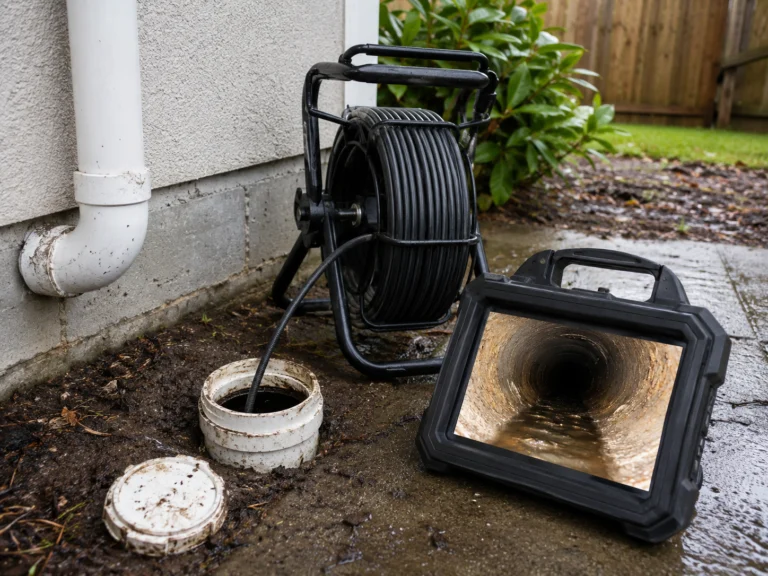
Anything under a year is worth a camera before paying for a third clearing. The inspection costs roughly what a clearing costs, and it is the only thing that will tell you which of the six causes you actually have.

Which Fixtures Are Affected

This narrows where the problem is faster than anything else, and you can work it out yourself in ten minutes.

  • One fixture only: the problem is local: that trap, or the branch serving it
  • Several fixtures on one side of the house: a shared branch line
  • All the low fixtures, toilets, showers, floor drains, the main line
  • The toilet gurgles when the washing machine drains, the main line, near-certainly
  • Water backs up in a shower when a toilet is flushed, main line, and it is a health issue
  • Everything is slow and it is getting worse, main line, and urgent

The distinction matters because a single slow sink is a small job and a compromised main line is not. Gurgling in a fixture that is not being used is the classic sign of the second.

What a Camera Settles

Whether it is roots
And which joints they are entering at, how far along the run, and how deep. Roots are the most common answer to a recurring clog in an older Santa Ana house. See tree roots in a sewer line.
Whether there is a belly
A dip that holds standing water permanently. Solids settle there instead of flowing on. No clearing method and no lining product corrects a belly, the fall has to be re-laid.
Whether the pipe is failing
Cracks, offsets, partial collapse. At that point the conversation is about repair rather than maintenance, and the sooner it happens the smaller it is.
Whether it is genuinely just habits
Grease and wipes are real causes, and if that is what the footage shows, the answer is free and involves changing what goes down the drain.

What It Costs to Find Out

Camera inspection
$250 – $500
Charged whether or not a fault is found
Spot repair
$1,500 – $3,500
Depends on depth and access
Trenchless sewer repair
$4,000 – $12,000
Lining or pipe bursting
Full sewer replacement
$6,000 – $20,000
Open trench, by length

The inspection is charged whether or not a fault is found, because you are buying the inspection and the recording rather than a result. A clean line is a legitimate outcome and worth having on file.

Set it against clearing the same drain twice a year indefinitely. Everything we price is on the pricing page, and the specific breakdown is on sewer camera inspection cost.

Third clearing this year? Look at the line before paying for a fourth.
Book a camera inspection

The Things That Are Genuinely Your Habits

What goes downWhat it does
Cooking grease and oilCools, sticks to the wall, and catches everything after it
“Flushable” wipesDo not break down like paper: a very common find
Coffee groundsSettle and compact, particularly in a belly
Hair, in showersBinds with soap residue into a mat
Rice, pasta and starchesSwell, and keep swelling
Cat litter, even the flushable kindSets
Paper towels and tissuesMade not to disintegrate. That is the point of them

None of that causes a recurring clog on its own in a sound, correctly graded line. It flows away. It causes one where there is already a rough spot, a dip or a narrowing for material to catch on. Habits and defects compound.

What the Pipe Material Predicts

Before anybody looks, the age of the house narrows the likely answer considerably.

MaterialEraHow it produces a recurring clog
ClayPre-1970sA joint every few feet, roots at any of them
Cast iron1950s–1970sScale builds inward; the rough surface catches everything
OrangeburgMid-century, occasionalDeforms into an oval, then collapses
ABS plastic1970s onwardUsually sound — look for a belly or crushing instead
Lined pipeAfter a CIPP repairShould not recur; if it does, check the lining job

A mid-century Santa Ana house on original clay with a mature tree nearby is the single most common version of this call, and roots are the answer far more often than not. A 1990s house on ABS that keeps clogging is a different question, and a belly, often from settlement or from how the line was bedded originally — moves to the top of the list.

Things Not to Do

  • Do not keep pouring chemical drain cleaner in. It generates heat, it sits against the pipe wall above a blockage it cannot clear, and on old cast iron that is genuinely not good for the pipe
  • Do not force a rented snake into a line you suspect is damaged. A cable can catch in a broken section and make a repair considerably larger
  • Do not jet a fragile line without looking first. High-pressure water in a deteriorated clay pipe can do real harm
  • Do not agree to a sewer replacement without seeing footage. It is your line and you are entitled to watch the video
  • Do not ignore gurgling. It is air displacing in a partly blocked main, and it is the warning before the backup

What This Site Is About, and What Belongs to Another Trade

We are licensed and insured plumbers, and this site is about leaks — finding the ones you cannot see and repairing them properly. Roughly half of what looks like a plumbing leak turns out not to be one, so the boundary is worth stating plainly.

Roof leaks are a roofer. Water under an air handler is an HVAC technician clearing a condensate drain. Water under an appliance is appliance repair. Drying, restoration and mold are separate trades again, and gas line repair is SoCalGas or a licensed gas fitter. We detect gas leaks, we do not repair gas lines.

The full list, with the trade to call for each, is on what we don’t do.

When It Is Actually Urgent

SignWhy
Sewage backing up into a tub or showerA health issue — stop using water now
Multiple fixtures backing up at onceThe main line is failing, not blocked
Sewage surfacing outsideThe lateral has broken below ground
Ground settling above the lineSoil is washing into a break
A smell indoors with slow drainsWaste is not clearing the system

Anything on that list means stopping water use in the house until somebody looks. Everything else on this page can wait for a scheduled appointment.

What Happens After the Camera

1
The line gets cleared first if it has to be
A camera cannot pass a full blockage. That step is priced before it is done, never discovered at the end.
2
The full run is recorded
Not to the first thing worth mentioning — all the way out, because a second fault past the first changes the repair.
3
Anything found is located and marked
Position on the ground and depth, which is what makes a repair a spot repair rather than a search.
4
You get the footage and a written report
Yours to keep, and yours to show to anybody else.
5
Options are priced, including doing nothing
Some findings are genuinely not urgent. A contractor who cannot distinguish urgent from tolerable is not giving you advice.
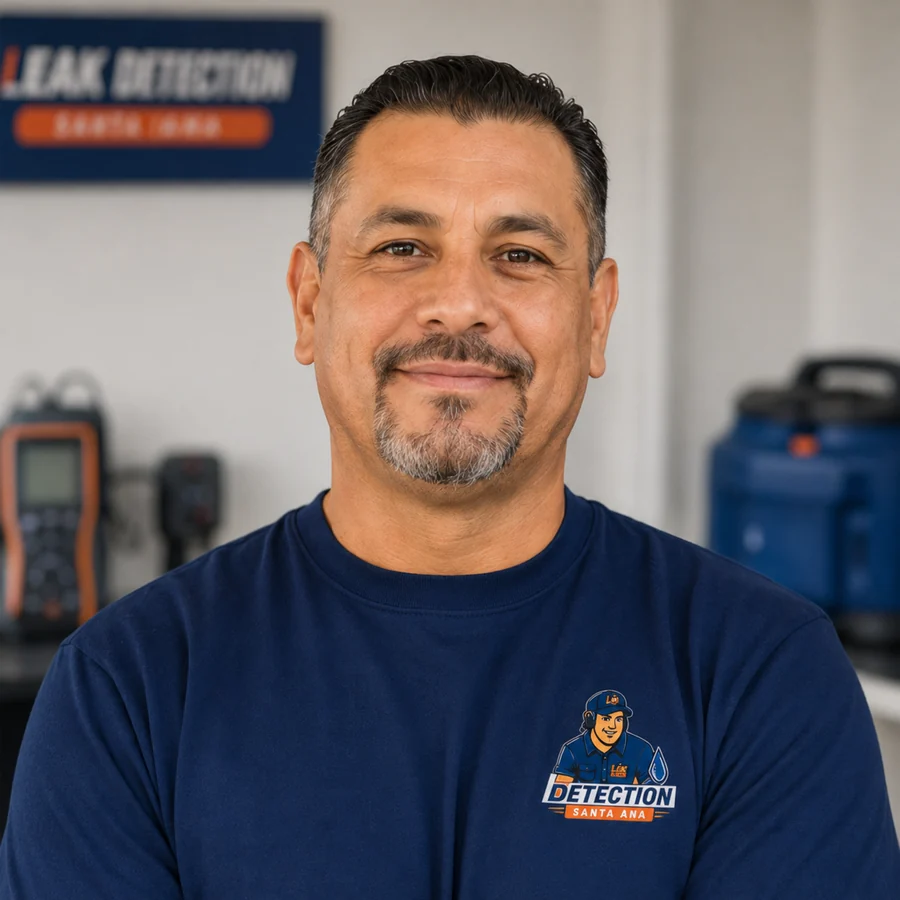
David Herrera, Founder & Lead Leak Detection Technician
About the Author
David Herrera, Founder & Lead Leak Detection Technician
David founded Leak Detection Santa Ana in 2026 after more than 15 years finding and repairing leaks across Orange County. He leads the crew that does the work, and the judgement calls on this page are the ones he uses in the field. Meet the team.

Book a Camera Inspection

Find out which of six causes you have before paying for another clearing.

(714) 386-7923Call or text, day or nightSchedule a Visit

What’s Included

  • Acoustic, thermal & tracer-gas location
  • Plain-language explanation of what we found
  • Firm written quote, on-site
  • No-find-no-fee guarantee

Frequently Asked Questions

Because the snake bores a hole through what was caught and leaves whatever was catching it — roots, a belly, an offset joint, scale or a crack. Flow is restored, the defect is not, and material starts collecting again.

Anything inside a year points at a defect rather than a blockage. Within days usually means the clearing never reached the real obstruction; within months points at roots or a belly collecting solids.

If several fixtures are slow at once, if a toilet gurgles when the washing machine drains, or if water backs up in a shower when a toilet is flushed, it is the main line. One slow sink with everything else fine is local.

A dip in the line that holds standing water permanently, so solids settle there instead of flowing on. No clearing method fixes it and no lining product corrects it, the section has to be excavated and re-laid to grade.

Not repeatedly. It generates heat and sits against the pipe wall above a blockage it cannot clear, which is genuinely bad for old cast iron. It also does nothing at all about roots, a belly or a crack.

It costs roughly what a clearing costs and it tells you which of six causes you actually have. Against clearing the same drain twice a year indefinitely, it is not a close call.

They are one of the more common things we pull a camera back out of. They do not break down the way paper does, whatever the packet says. In a sound, correctly graded line they would still flow away regardless. They catch on something. They catch on something.

That is a real and useful result, and it points at habits or at a fixture-level problem rather than the line. You keep the footage, which is worth having on file the next time somebody suggests a sewer replacement.

Yes — sewage backing up into a tub or shower, several fixtures backing up at once, or sewage surfacing outside. Stop using water in the house and call. Everything else can wait for an appointment.

You can, and some people do for years. What is worth knowing is that roots widen the defect they grow through, so the interval between clearings tends to shorten, and the repair gets larger while you wait.