Mon–Sat 7am–6pm · 24/7 Emergency Line
Serving Santa Ana & Central OC

LEAK GUIDE · SANTA ANA & CENTRAL ORANGE COUNTY

Who Is Responsible for a Water Leak?

Responsibility follows the pipe, not the damage, which is why the unit with the wet ceiling is so often not the unit that pays. This page sets out the boundaries: the City and you, landlord and tenant, association and owner, and neighbour to neighbour.

Who Is Responsible for a Water Leak?

The City of Santa Ana and You

For water supply, the boundary is the meter, and it is not ambiguous.

SectionWhose responsibility
The water main in the streetCity of Santa Ana
The service line from the main to the meterCity of Santa Ana
The meter itselfCity of Santa Ana
From the meter to your houseProperty owner
Everything inside the houseProperty owner
Irrigation, pool and outbuilding linesProperty owner
Worth knowing If the leak is on the street side, report it to the City on (714) 647-3380 and do not pay a plumber for it. A wet patch right at the meter box is the ambiguous case, and locating the leak precisely is what settles which side of the boundary it is on.

Sewer Is Less Tidy

The sewer lateral does not split at the same place, and it is worth confirming rather than assuming.

  • From your fixtures to the building edge is unambiguously yours
  • The lateral running across your property to the connection is normally yours too
  • Where responsibility ends between the property line and the public main varies by jurisdiction, confirm it with the City for your specific address rather than taking a contractor’s word for it
  • The public main in the street is the City’s
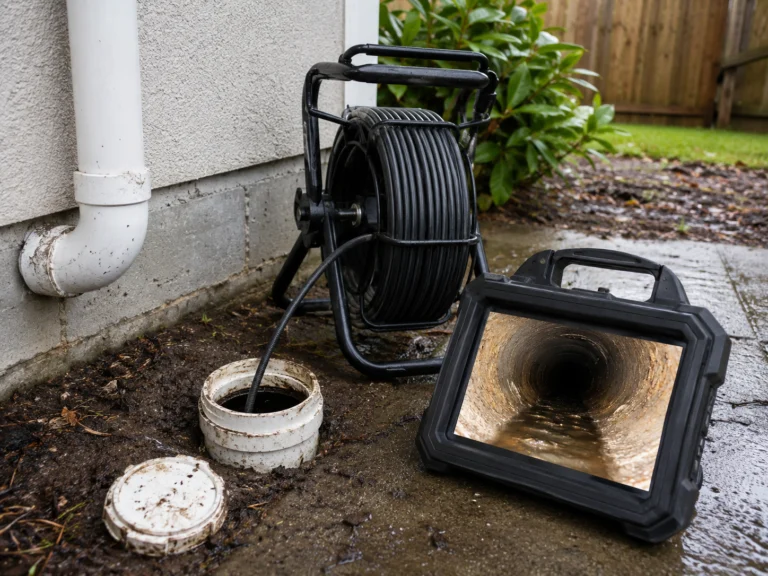
  • A camera inspection tells you how far along the run the fault is, which is the first thing anybody will ask

More on the anatomy of it at what is a sewer lateral. The practical point is to establish the distance before agreeing to a repair, not after.

Landlord and Tenant

SituationGenerally
The building’s plumbing failsLandlord. It is the building
Damage to the tenant’s possessionsThe tenant’s own renters insurance
Damage to the buildingLandlord’s policy
A tenant caused the blockageCan shift, and it depends on the lease
A tenant knew and did not report itCan shift, which is why written notice matters
Emergency shut-off by the tenantAlways allowed, nobody needs permission to stop damage

The written-notice row is the one tenants should act on. A phone call nobody logged is not much use three weeks later when the question becomes who knew what and when. Email or text, so there is a timestamp.

HOAs and Condominiums

The most contested category, and the one where the answer is genuinely in a document rather than in general principle.

Read the governing documents
The CC&Rs decide the split between association and owner. They are specific, they differ between associations, and general rules of thumb are not a substitute for reading yours.
The common pattern
Associations often carry the building structure and shared systems; owners often carry what is inside their unit’s walls. Often is not always, and the pipe in a demising wall is exactly where disputes live.
The damage is not the question
Which line failed and where decides responsibility, not which unit got wet. Water appears in the lowest unit almost regardless of where it started.

What we provide is the fact base: which line failed, where, and by what mechanism, in writing with photographs. That is what a board or an insurer decides on.

Neighbour to Neighbour

SituationWhere to start
Their irrigation is soaking your yardTell them, most people do not know
Water crossing a boundary after rainUsually drainage rather than a leak
A shared line between two propertiesEstablish where it runs before anything else
Their pool backwash discharging your waySame, a conversation first
It becomes a disputeLocate the leak and get it in writing

Locating the source in writing is what turns a disagreement into a fact. We do not take sides in a boundary dispute; we establish where the water is coming from and put it on paper.

Why the Wet Room Is Rarely the Guilty One

Almost every dispute in this area starts from the same wrong assumption: that the damage marks the source. It very rarely does.

Where the water showsWhere it commonly starts
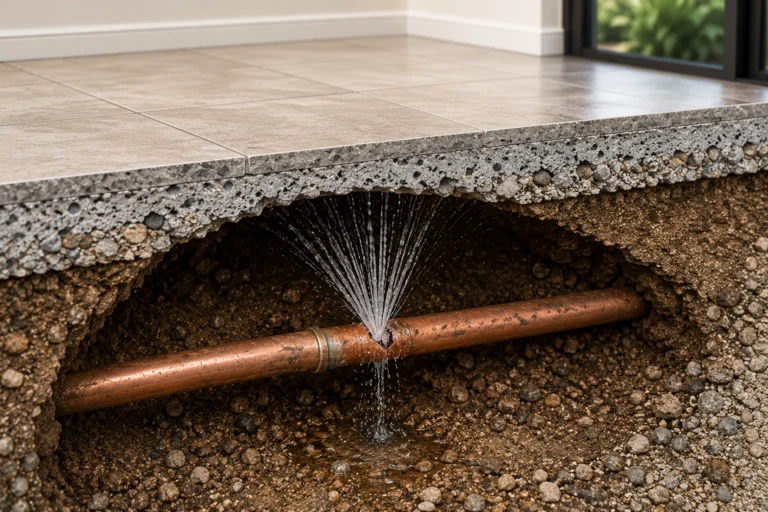
A ground-floor ceilingA bathroom above, or a line in the floor between
A downstairs unit in a condoThe unit above, or a shared riser in the wall
A wall on one side of a demising partitionThe line serving the tenancy on the other side
The lowest point of a sloping floorAnywhere uphill of it
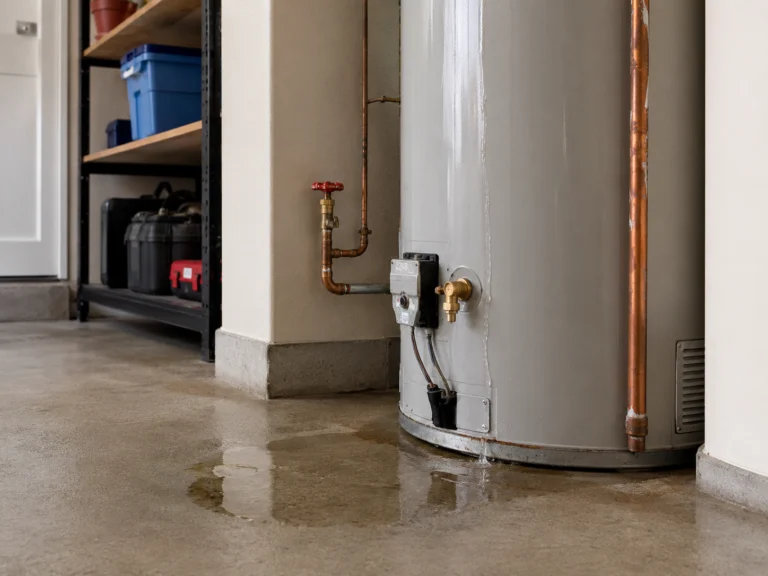
A garageThe slab, or a water heater, or the floor above
Outside at a foundationIrrigation, the main line, or drainage

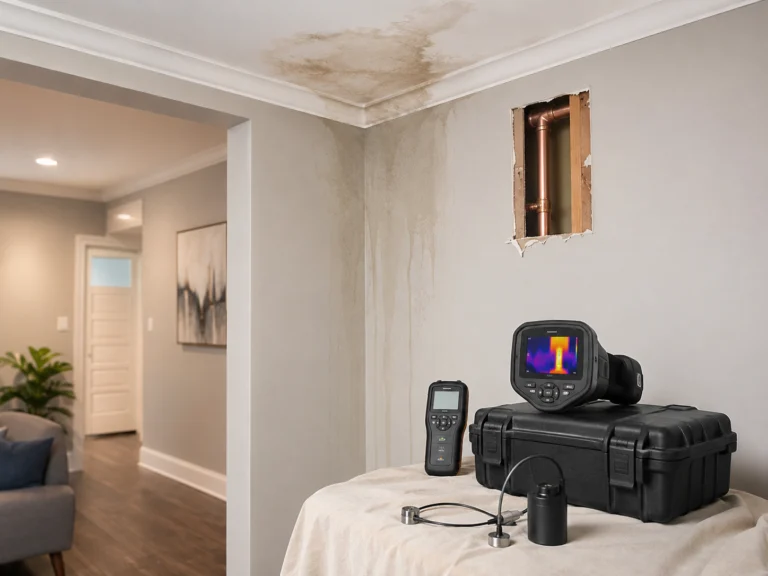
Water runs along framing, ducts and wiring until it finds a gap, and it comes down there. Which is why establishing the failed line, not the wet room, is the thing that has to happen before anybody works out who pays. Everything else in a dispute is downstream of that single fact.

Insurance Sits Alongside All of This

Responsibility and cover are two different questions. You can be responsible for a leak and have it covered, or not responsible and still be dealing with the damage.

  • Read your own policy rather than any summary, including this one
  • Many policies treat sudden damage more favourably than damage that developed slowly
  • Many cover the resulting damage more readily than the failed pipe itself
  • The date you first noticed it is part of the story — write it down
  • Photographs taken before cleanup are what a claim rests on
  • Keep the failed component. Do not let anybody take it away

More at does insurance cover water leaks and documenting a leak for an insurance claim.

What This Site Is About, and What Belongs to Another Trade

We are licensed and insured plumbers, and this site is about leaks — finding the ones you cannot see and repairing them properly. Roughly half of what looks like a plumbing leak turns out not to be one, so the boundary is worth stating plainly.

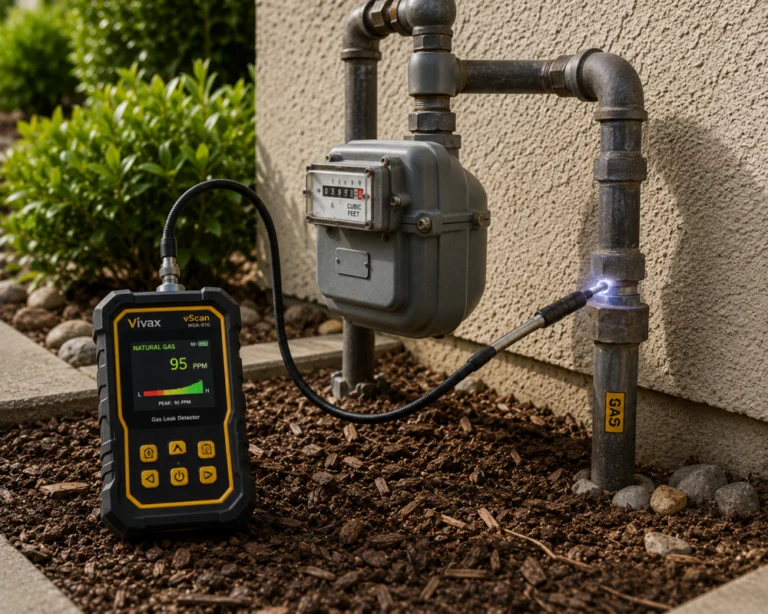
Roof leaks are a roofer. Water under an air handler is an HVAC technician clearing a condensate drain. Water under an appliance is appliance repair. Drying, restoration and mold are separate trades again, and gas line repair is SoCalGas or a licensed gas fitter. We detect gas leaks, we do not repair gas lines.

The full list, with the trade to call for each, is on what we don’t do.

What We Will and Will Not Do

We establish the facts
Which line failed, where along it, at what depth, and by what mechanism — in writing, with photographs.
We state the meter boundary
Because that one is not a judgement call, and we are not going to quote you for a repair the City owes you.
We will not adjudicate who pays
Being the party that decides would compromise the report’s value to everybody relying on it, and the report is the useful thing we produce.
We provide what a claim needs
Cause, location, method, dated photographs, and an itemised quote.

A Practical Order of Operations

1
Stop the water
Nobody needs permission to shut a valve. Do it first and argue about it afterwards.
2
Photograph everything before cleanup
Wide and close, dated. This is the step that cannot be redone.
3
Notify in writing
Landlord, association, or neighbour — whichever applies. Email or text, so there is a timestamp.
4
Get the leak located
Which line, and where. That is the fact everything else hangs on.
5
Read the relevant document
The lease, the CC&Rs, or the policy. General principle is not going to settle it.
6
Then have the conversation about money
With the location established and the documents read, it is usually a much shorter conversation.

If You Need It Established

Detection visit
$150 – $500
Flat, credited toward the repair
Spot repair
$1,500 – $3,500
Accessible, or under finished floor
Reroute
$2,000 – $4,500
Per line
Whole-house repipe
$6,000 – $15,000
PEX or copper

Detection is flat, credited toward the repair, and there is no detection fee if we cannot locate the leak during your paid visit. The written report, photographs and itemised quote come regardless — including when the answer is that the leak is on somebody else’s side of a boundary.

Disagreement about whose leak it is? Start with where the water is actually coming from.
Book a detection visit
David Herrera, Founder & Lead Leak Detection Technician
About the Author
David Herrera, Founder & Lead Leak Detection Technician
David founded Leak Detection Santa Ana in 2026 after more than 15 years finding and repairing leaks across Orange County. He leads the crew that does the work, and the judgement calls on this page are the ones he uses in the field. Meet the team.

Get a Free On-Site Quote

We establish which line failed and where, in writing. That is what settles it.

(714) 386-7923Call or text, day or nightSchedule a Visit

What’s Included

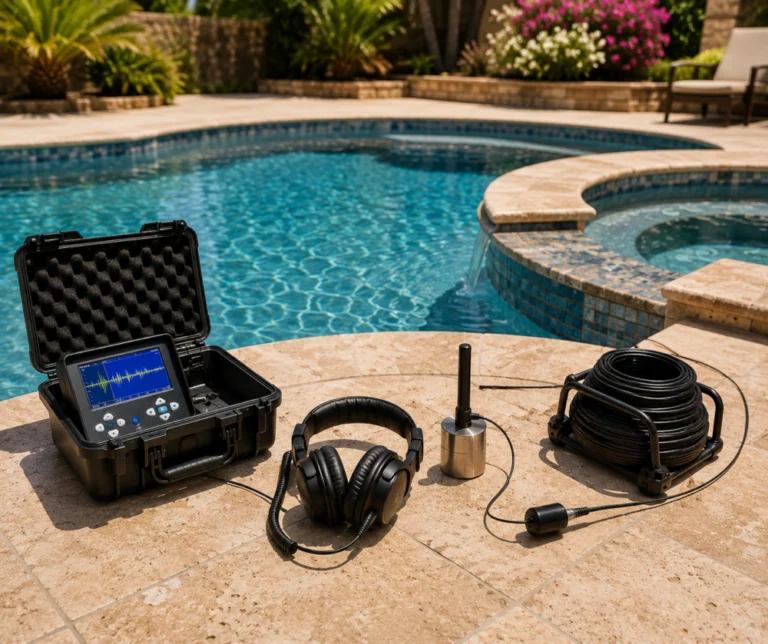
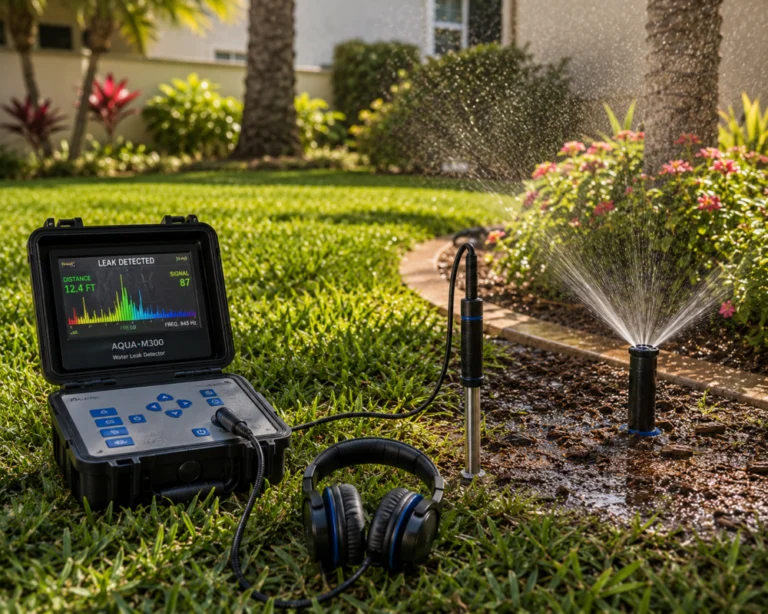
  • Acoustic, thermal & tracer-gas location
  • Plain-language explanation of what we found
  • Firm written quote, on-site
  • No-find-no-fee guarantee

Frequently Asked Questions

The meter is the boundary. The City of Santa Ana owns the main, the service line to the meter, and the meter itself. From the meter to your house is the property owner’s. If the leak is on the City’s side, report it on (714) 647-3380.

From your fixtures to the building edge and across your property is normally yours. Where responsibility ends between the property line and the public main varies by jurisdiction — confirm it with the City for your address rather than assuming.

Notify in writing rather than only by phone, so there is a timestamp, and photograph everything including your own possessions. You never need permission to shut the water off to stop damage. Beyond that, tenant rights are a legal question rather than a plumbing one.

That depends on the lease or the CC&Rs, not on which unit got wet. Water appears in the lowest unit almost regardless of where it started. What settles it is establishing which line failed and where, which is what our report does.

Read the governing documents; they are specific and they differ between associations. The common pattern is that associations carry the structure and shared systems while owners carry what is inside their unit, but often is not always.

Tell them — most people genuinely do not know. A leaking irrigation valve produces no symptom on their side except a bill. If it becomes a dispute, having the source located in writing turns a disagreement into a fact.

No, and that is deliberate. We establish which line failed and where, in writing with photographs. Being the party that decides who pays would compromise the value of that report to everybody relying on it.

No. They are separate questions. Responsibility is about whose pipe it was; cover is about what your policy says. You can be responsible and covered, or not responsible and still dealing with the damage.

Not knowing is generally different from knowing and not acting, which is why written notice matters so much once you do know. Write down the date you first noticed it. That date turns up in every conversation that follows.

Yes. Stopping active damage never requires permission, and no reasonable landlord or association would argue otherwise. Shut it off first and notify in writing immediately afterwards.