Discoloured water is usually iron, either stirred up in the city main, or coming off the inside of your own pipes or water heater. Four checks separate those, they take about ten minutes, and roughly half the time the answer is that this is not your plumbing at all.
| Pattern | Most likely |
|---|---|
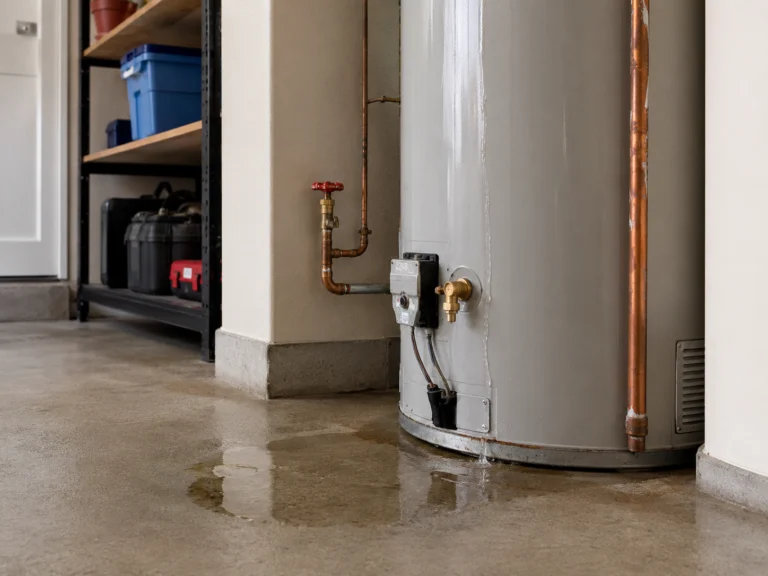
| Hot only, every hot tap | The water heater, sediment or a failing anode |
| Cold and hot, whole house, clears after running | Disturbed sediment in the main |
| Cold and hot, whole house, does not clear | Corroding supply pipe, galvanised or old iron |
| One tap only | That branch line, or a fixture-level issue |
| After the water was off for work | Air and sediment disturbed, run it and see |
| Only first thing in the morning | Overnight standing in a corroding line |
| Neighbours have it too | The city main, not your problem to fix |
The morning-only pattern is a useful one. Water sitting still in a corroding line picks up more colour than water that has been moving, so discolouration that clears within a minute and returns after every long standing period points at the pipe rather than the supply.
Hot-only discolouration is one of the more clear-cut diagnoses on this site.
Water heater replacement is general plumbing rather than what this business is built around, and a company that does it every day will usually do it better and cheaper. What is ours is a heater that is leaking. See water heater leak detection.
| Material | What produces the colour |
|---|---|
| Galvanised steel | Rusts from the inside; the classic cause of brown water |
| Old iron piping | Same mechanism |
| Copper | Rarely brown, blue-green staining is the copper signature |
| PEX or CPVC | Does not corrode; colour is coming from somewhere else |
| A mix of materials | Where dissimilar metals join, corrosion accelerates |
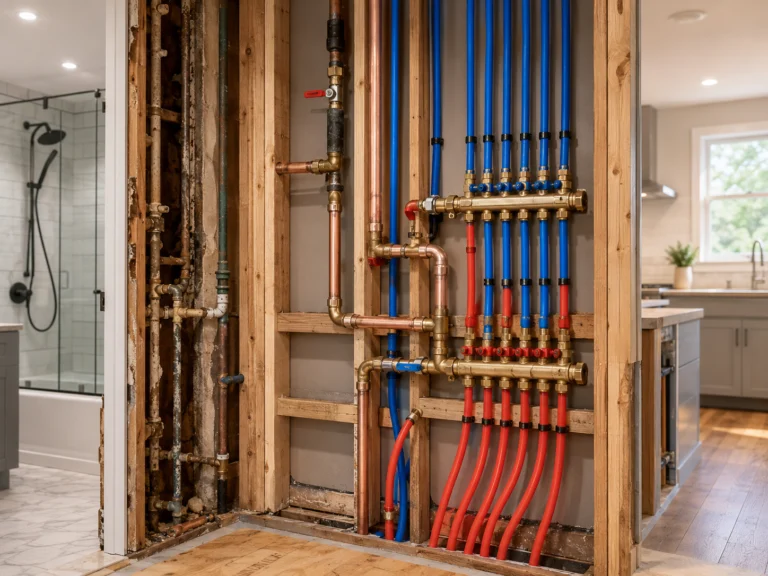
Galvanised steel is the answer far more often than anything else. It rusts inward, the bore narrows, and the rust it sheds is what you are seeing in the glass. It is also why brown water and falling pressure so often arrive together. See low water pressure.
Brown and orange are iron. The other discolourations people ask about have their own explanations, and most of them are not a plumbing repair either.
| Colour | Usually |
|---|---|
| Brown, orange, reddish | Iron — corroding pipe, a water heater, or disturbed main |
| Blue or blue-green staining | Copper, and often acidic water working on it |
| Cloudy or milky, clears from the bottom up | Air — harmless, and it clears in the glass |
| Black specks | Frequently a degrading rubber washer or supply hose |
| Yellow tinge, whole house | Often the supply rather than the house |
| Pink staining in fixtures, not the water | Airborne bacteria growing on damp surfaces, not plumbing |
The cloudy row is worth knowing because it worries people unnecessarily. Fill a glass and watch it: if the cloudiness clears from the bottom upward over a minute, that is dissolved air coming out of solution, which is common after any interruption to the supply and is not a fault at all.
We are licensed and insured plumbers, and this site is about leaks — finding the ones you cannot see and repairing them properly. Roughly half of what looks like a plumbing leak turns out not to be one, so the boundary is worth stating plainly.
Roof leaks are a roofer. Water under an air handler is an HVAC technician clearing a condensate drain. Water under an appliance is appliance repair. Drying, restoration and mold are separate trades again, and gas line repair is SoCalGas or a licensed gas fitter. We detect gas leaks, we do not repair gas lines.
The full list, with the trade to call for each, is on what we don’t do.
Iron in the water marks things, and the marks are the part people actually live with while they work out the cause.
That last one is worth making a habit after any work on the street or on the house supply. A few minutes at an outside tap sends the disturbed sediment somewhere it does no harm, and it costs nothing but the water.
| Sign | What it adds up to |
|---|---|
| Brown water at every tap, not clearing | The supply pipe is shedding rust continuously |
| Pressure has also faded over years | The bore is narrowing as it corrodes |
| The house has galvanised steel | The material has a finite life and it is ending |
| Pinhole leaks starting to appear | The same corrosion, now through the wall |
| Discolouration worse after any standing period | Water sitting against corroding metal |
Any two of those together is a repipe conversation rather than a repair one. Galvanised steel does not fail once and then behave. See whole house repipe and PEX vs copper.
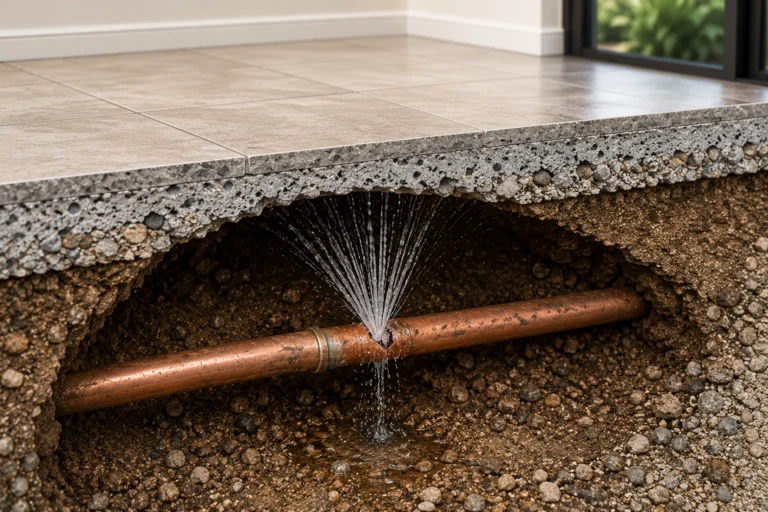
Discoloured water on its own is not a leak call. If it arrives alongside a bill that jumped, a meter that will not sit still, or damp appearing anywhere, then the underlying corrosion has probably gone through the pipe wall somewhere, and that is what detection is for.

Brown water alongside a bill that jumped suggests the corrosion has gone through somewhere.
(714) 386-7923Call or text, day or nightSchedule a VisitUsually iron — either sediment stirred up in the city main, or rust shedding from the inside of your own galvanised pipes or water heater. Four checks separate them: hot or cold, one tap or all, does it clear when run, and do the neighbours have it.
The water heater. Sediment settles in the tank over years, and the sacrificial anode rod eventually gets consumed — after which the tank lining itself starts to corrode. On an older tank, rusty hot water often means it is near the end.
That is the City’s determination rather than a plumber’s, and we are not going to guess at it. If you are concerned about water quality, contact the City of Santa Ana directly rather than any contractor.
Then it is the city main rather than your plumbing. Hydrant flushing, a main repair or a pressure change stirs up iron sediment that has been sitting in the network. Call the City on (714) 647-3380; it usually clears within hours to a day.
Water that clears was disturbed sediment rather than continuous corrosion, which is the better answer. If it clears and then returns after every long standing period, the pipe is still shedding. That pattern points at the plumbing.
Not by itself. Discolouration is a corrosion symptom, not a leak symptom. But brown water alongside a bill that jumped or a meter that keeps turning suggests the same corrosion has gone through the wall somewhere.
It catches particles at one point and does nothing about a corroding line. If the pipe is the source, it will keep narrowing and keep shedding regardless of what is filtering the output.
Galvanised steel, overwhelmingly. It rusts from the inside out. Old iron does the same. Copper does not usually produce brown water; blue-green staining is the copper signature. PEX and CPVC do not corrode at all.
Many people do, and it clears settled sediment. What it does not do is reverse corrosion — if the tank itself has started rusting internally, flushing is postponement rather than a fix.
Avoid laundry while it is discoloured — iron stains fabric and the stain is hard to remove afterwards. For anything beyond that, questions about use and safety belong to the City rather than to us.