Mon–Sat 7am–6pm · 24/7 Emergency Line
Serving Santa Ana & Central OC

LEAK GUIDE · SANTA ANA & CENTRAL ORANGE COUNTY

How a House Gets Repiped, Step by Step

A repipe replaces the supply lines throughout a house. It sounds enormous and it is genuinely disruptive, but it is a well-understood job with a predictable shape, usually a few days, mostly small holes in drywall, and the water off for less of it than people expect. Here is what the week actually looks like.

How a House Gets Repiped, Step by Step

When a Repipe Is the Right Answer

SituationRepipe?
Galvanised steel supply linesYes, the material has a finite life and it is ending
Third leak in two yearsYes, the pipe is telling you
Pinhole leaks appearing in several placesYes, water chemistry and age
Pressure faded across the whole house over yearsUsually: the bore has narrowed
Brown water at every tap that will not clearUsually: the pipe is shedding rust
One leak, sound copper, clear causeNo, repair it
Two reroutes already doneAsk for both numbers before a third
Worth knowing The honest test is whether you are repairing a failure or paying to find out where the next one is. One leak on sound pipe is an event. Repeated leaks on different runs is a condition, and repairing a condition one point at a time is the expensive way to do it.

The Sequence

1
Walk the house and plan the routes
Every fixture, every run, and where the new lines will travel, attic, walls, crawl space. You see the plan and where the openings will be before anything is cut.
2
Protect and prepare
Floor coverings along the working route, dust containment where cutting happens, and furniture moved away from the walls that will be opened.
3
Open access points
Small holes at the points the route needs, sized for the work rather than for convenience. Not whole walls.
4
Run the new lines
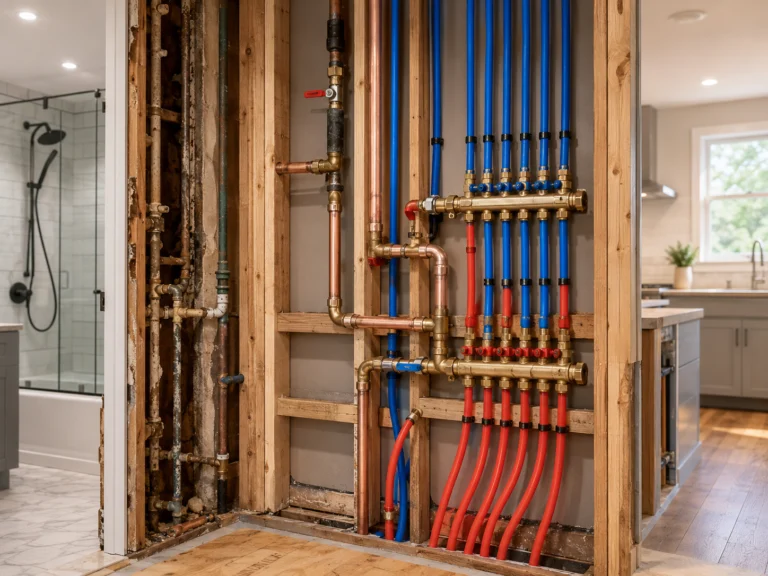
Usually PEX, because it bends through framing with far fewer joints, and every joint avoided is a future failure point you did not have to have.
5
Tie in at fixtures and at the supply
This is the part that needs the water off, and it is scheduled so the off-window is one block rather than several.
6
Pressure test the whole system
Before anything closes. A repipe that has not been tested is not finished.
7
Close, patch, and clean up
We patch what we opened. Texture, paint and tile are finish trades and are named as exclusions on the quote.

How Long, and How Disruptive

QuestionTypically
How many days?Two to five for most single-family houses
Do I have to move out?Usually not, most people stay
How long is the water off?Hours at a time, not days, and scheduled
Will I have a working bathroom?Usually, for most of it
How many holes?More than you expect, smaller than you fear
Is it noisy?Yes, during cutting. Not all day, every day
When does the mess stop?When patching finishes, before finish trades start

The out-of-service question is the one worth raising when it is scoped rather than mid-job. If somebody in the house genuinely cannot manage without water at particular times, say so up front, sequencing around it is easy at the planning stage and awkward afterwards.

PEX or Copper

PEX
Flexible, so it turns corners without a fitting. Far fewer joints inside walls where you would never see one fail, and it does not scale or corrode the way copper does in hard water, which matters here, where the supply runs around 250 ppm.
Copper
Rigid, long-established, and still right for exposed runs and some tie-ins. It costs more and takes longer to install through existing framing, because every direction change is a joint.
What we would do
PEX through walls and attic, copper where a run is exposed or where matching the existing material is cleaner. Whichever goes in is named on the quote — material should never be something you find out about later.

The full comparison is on PEX vs copper.

What Gets Opened, and What Does Not

OpenedNot opened
Small access holes along each routeThe slab
Walls at each fixture tie-inFinished flooring
An attic hatch or ceiling access where usedRooms the routes do not pass through
Cabinet backs, occasionallyAnything outside the agreed plan

A single-storey house with an accessible attic is the easiest version of this job, because most of the run happens overhead and the openings are concentrated at the fixtures. A two-storey house with no attic access above the ground floor is the hardest, and it is worth knowing which you have before comparing quotes.

Things Worth Doing While the Walls Are Open

A repipe is the one time in a house’s life when the walls are open along every supply route. Several small jobs that would each need their own demolition become nearly free at that moment, and they are worth asking about at the quoting stage rather than remembering afterwards.

JobWhy now
Replace a failing pressure regulatorThe supply entry is already being worked on
Fit or replace an expansion tankSame access, and a regulated system needs one
Replace old fixture shut-off valvesThey seize with age, and they are behind the same panels
Replace braided supply connectorsWear items, cheap, and a common cause of indoor water damage
Add a shut-off where there is not oneSome older houses have fixtures with no isolation at all
Replace an old gate valve on the mainA ball valve turns in seconds at midnight; a seized gate valve does not
Insulate hot lines in the atticThe route is open and it will never be this easy again

None of it is upselling if it is offered as a list with prices and you decline the ones you do not want. What would be upselling is presenting them as necessary. They are not. They are simply cheaper now than they will ever be again, and the main valve row in particular is worth taking.

Permits and Inspection

  • A repipe is code-regulated plumbing work and requires a permit from the City of Santa Ana
  • We pull it where it applies, and it appears on the quote as its own line rather than folded into a round number
  • An inspection follows, and the work is left accessible for it — walls are not closed before it happens
  • The City’s Permit Counter is (714) 647-5800 if you want to confirm anything independently
  • A permitted, inspected repipe is a document you keep. It matters when you sell

A contractor who suggests skipping the permit is offering to save you a small amount now in exchange for an unpermitted alteration on your property record. More at plumbing permits in Santa Ana.

What This Site Is About, and What Belongs to Another Trade

We are licensed and insured plumbers, and this site is about leaks — finding the ones you cannot see and repairing them properly. Roughly half of what looks like a plumbing leak turns out not to be one, so the boundary is worth stating plainly.

Roof leaks are a roofer. Water under an air handler is an HVAC technician clearing a condensate drain. Water under an appliance is appliance repair. Drying, restoration and mold are separate trades again, and gas line repair is SoCalGas or a licensed gas fitter. We detect gas leaks, we do not repair gas lines.

The full list, with the trade to call for each, is on what we don’t do.

Getting Ready

Clear the walls
Move furniture, take pictures down, and empty the cabinets under sinks and in any room on the route.
Plan around the water
Fill a few containers, and know when the off-windows are. It is inconvenient rather than difficult.
Think about pets
Doors open, noise, and people moving through. A quiet room or a day elsewhere is kinder.
Line up the finish work
Texture, paint and tile happen after us. Booking that in advance is what stops a finished repipe sitting behind unpainted patches for a month.

Afterwards

What happensWhen
Pressure test passedBefore anything closes
InspectionBefore walls are closed
PatchingOurs. We patch what we opened
Texture, paint, tileFinish trades, after us
Water pressureOften noticeably better: a clean bore with no scale
WarrantyTwo years on workmanship, transferable with the property
PaperworkPermit, inspection, photographs — keep all of it

The pressure improvement surprises people in older houses. Replacing decades of scale and narrowing with a clean bore changes how the fixtures behave, and it is the part most people mention afterwards. Full terms on guarantees and warranties.

What It Costs, and Booking It

Detection visit
$150 – $500
Flat, credited toward the repair
Spot repair
$1,500 – $3,500
Accessible, or under finished floor
Reroute
$2,000 – $4,500
Per line
Whole-house repipe
$6,000 – $15,000
PEX or copper

A whole-house repipe typically runs $6,000 to $15,000 depending on size, number of fixtures, storeys and access. The commercial detail, the quoting process and the scheduling are on whole house repipe in Santa Ana.

Third leak in two years? Ask for the repipe number alongside the repair quote.
Get a written quote
David Herrera, Founder & Lead Leak Detection Technician
About the Author
David Herrera, Founder & Lead Leak Detection Technician
David founded Leak Detection Santa Ana in 2026 after more than 15 years finding and repairing leaks across Orange County. He leads the crew that does the work, and the judgement calls on this page are the ones he uses in the field. Meet the team.

Get a Free On-Site Quote

We will price the repipe alongside the repair so you can compare them properly.

(714) 386-7923Call or text, day or nightSchedule a Visit

What’s Included

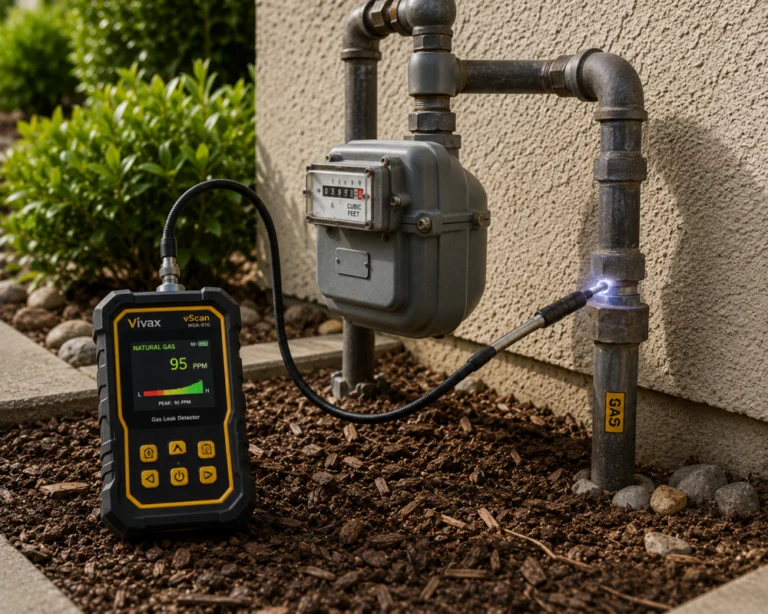
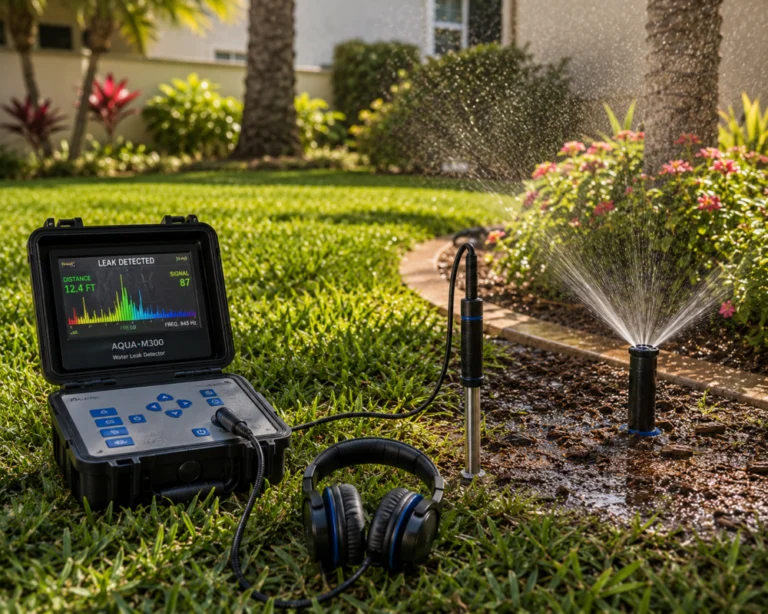
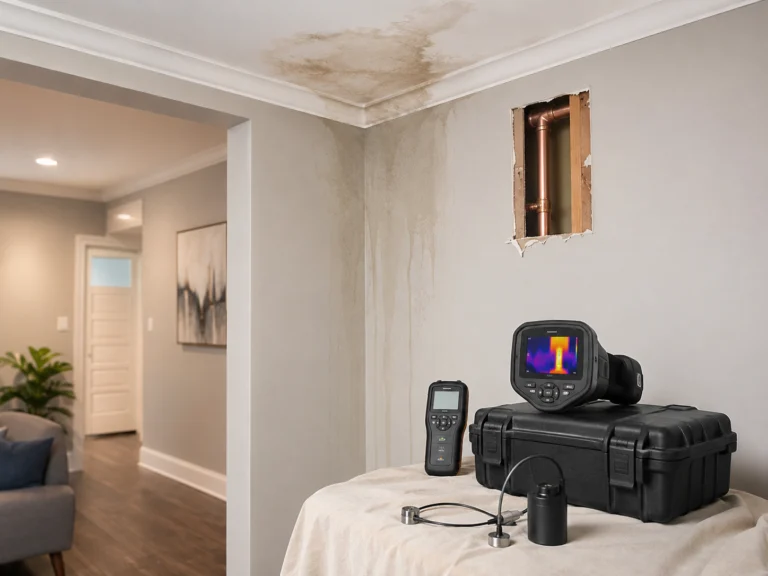
  • Acoustic, thermal & tracer-gas location
  • Plain-language explanation of what we found
  • Firm written quote, on-site
  • No-find-no-fee guarantee

Frequently Asked Questions

Two to five days for most single-family houses, depending on size, storeys and access. A single-storey house with a reachable attic is the fastest version; a two-storey house with no attic access above the ground floor is the slowest.

Usually not — most people stay. The water goes off in blocks of hours rather than days, and you generally keep a working bathroom for most of it. If somebody in the house genuinely cannot manage without water at certain times, say so when it is scoped.

More than you expect and smaller than you fear. Access holes along each route and at every fixture tie-in, sized for the work rather than for convenience. You see the plan and where the openings go before anything is cut.

We patch what we opened. Texture matching, paint and tile are finish trades and are named as exclusions on the quote — stated up front rather than discovered at the end. Booking those in advance is worth doing.

PEX through walls and attic, copper where a run is exposed or matching the existing material is cleaner. PEX bends around corners without fittings, so there are far fewer joints inside walls, and it does not scale in hard water.

Yes, a repipe is code-regulated work. We pull it where it applies and it shows on the quote as its own line. An inspection follows before walls are closed, and the permitted, inspected paperwork is worth keeping for when you sell.

Often noticeably, in an older house. You are replacing decades of scale and internal narrowing with a clean bore, and that is the change most people comment on afterwards.

When you are paying to find out where the next failure will be rather than fixing one. Galvanised steel anywhere in the house, a third leak in two years, or pinholes appearing in several places all point that way.

Typically $6,000 to $15,000 depending on size, fixture count, storeys and access. Two reroutes already done starts to approach it, which is why it is worth asking for both numbers before agreeing to a third.

Two-year workmanship warranty on the work performed, transferable with the property. Read the exclusions — on ours and on anybody else’s. Full terms are on the guarantees page.